
Trump Refuses to Sign Bipartisan Housing Bill
72 claims analyzed
Transcript(72 claims)

Republicans were cruising toward a big election year legislative victory, but president Trump just hit the brakes. I'm Dana Bash. Let's go behind the headlines and inside politics. Quote, this is why we can't have nice things, end quote. It's a message I got from an exasperated senior Republican congressional aid after president Trump abruptly announced he will not sign a bipartisan housing affordability bill that congress passed overwhelmingly yesterday.
Here's what the president said, quote, today's housing news conference and signing is hereby canceled until such time as we passed the desperately needed Save America Act, which I consider to be a national emergency. Now the president really pulled the rug out from under Republicans at the very moment GOP leaders were celebrating what they thought was about to be a big GOP victory, a presidential signing ceremony.

Let's show the American people what legislating looks like. Let's show the American people how you bring together and do something on a bicameral basis, and we did that. And we did that in conjunction with president Trump and his priorities.
Again, that was at the almost exact same moment president Trump posted that he's not signing. That very bill that, the chairman said shows what legislating looks like. Here's house speaker Mike Mike Johnson at that same press conference a few minutes later.

In the process of this press conference, president Trump announced that he is canceling the bill signing for the housing bill that you all were just talking about. What is your reaction?

Yeah. I my reaction is the truth of the matter. I spoke to the president twenty minutes before I went in and gave that rousing speech to the House Republicans this morning. He and I've talked about this a lot. He has expressed his the priority and the preference of the Save American Act.
Now Johnson claims president Trump told him in that call this morning that he was going to cancel the signing. Let's get straight to Manu Raju on Capitol Hill. Wow, Manu.

Yeah. Completely blindsiding Republican leaders, particularly here in the senate. The senate majority leader John Thune had no idea that the president would essentially cancel what was expected to be a victory lap. The Republicans have been pleading with the president to focus on an affordability agenda, and they passed this bill with massive bipartisan majorities in the house and the senate. They wanted to go and pout their efforts to reduce housing costs.
And just moments ago, that announcement by the president catching the pres the Republican leaders off guard. I just talked to John Thune himself moments ago. I asked him, did the president make a mistake by canceling the signing ceremony and making these demands on the Save America Act? He said, I mean, that was his call to make, and he went on to tout that housing bill that has been worked on for a long time. He called it a great piece of legislation.
He said it addresses he said it's a quote an affordability issue. He said, quote, I eventually hope he'll find his way to sign it. So expect that to be a big part of the discussion that is still expected to happen behind closed doors. Trump has been making this case for months for the senate to pass the so called save America act, but they have tried repeatedly in the senate to do that. And they simply just do not have the votes to pass it.
John Thune has made that case to the president directly. He has said that publicly. Other Republican senators have said that. Trump has come back and said, well, just do away with the filibuster and try to pass along straight party lines, but Thune does not have the votes to get rid of the filibuster. That is a second problem that the senate Republican leader has.
Meantime, the speaker of the house says that they may try to roll this into the budget process to pass the Save America Act along straight party lines. But here's another problem. Doing that would run afoul very likely in the senate's very strict budget rules. So there is really no way to get this bill to the president's desk. And meantime, the legislative agenda has been completely stymied.
The key surveillance law, the spying powers have been turned off. The position for the director of national intelligence is not filled on a permanent basis because of the president's demands. So the question here, Dana, is amid this turmoil between the senate GOP and president Trump, will anything change when he be he meets behind closed doors? Will he be rate those GOP senators? Will they they convince him that his push is not actually going to succeed?
All big questions in a matter of moments. We'll see what happens behind closed doors, Dana.
Yeah. And, you can see all the activity behind Manu. That is because the president is still expected to be up there despite saying he's not gonna sign, this bill. Manu, thank you so much. Let us know, if you hear anything else, here with a terrific group of reporters.
Let me just bottom line this because there's so much drama in what happened, but taking a step back, what the president is doing is saying I care so much about this legislation that he wants to be put in place about voting to make it harder to vote and having to do with a whole bunch of other. Restrictions, I should say he he thinks it's about cleaning it up, but there are lots of debates on that. He cares so much about that that the number one issue for voters, which is affordability and housing is a huge part of that. He's willing to sacrifice that despite a big bipartisan vote.

I mean, I would just ask you to do this. Look at the bipartisan numbers in the house and the senate that this legislation passed with overwhelmingly, right? How often does that happen? When do we see both parties coming together to address a major concern of voters and actually pass something that you just did
not part of the show.
I know you said legislators legislatively. Yeah. Exactly. Mean, yeah,
for putting
up some of this
specific This this doesn't happen anymore in our politics. There is nobody you talk to that I've talked to on the Republican side or Democratic side that just didn't see this as a huge win for all these members to go out and sell on the campaign trail. And you are right. Donald Trump is saying you don't get that win to go sell this on the campaign trail, at least not yet, until I get to hammer away at this bill that I keep being told I don't have the votes to actually pass.
And on that bill, the Save America Act. This is one example of a Republican who's in a a tough race. Senator John, Houston, He is, from Ohio, and he said to CNN today, the Save America Act is very important. I voted for it six times. The housing act is also very important.
I did my job, and I got this housing bill passed, and I'm confident that the president will sign the bill eventually. We'll just continue to work with him to get that done.

Well, the blindsiding just doesn't stop of senate Republican leaders because when the president put this announcement out on truth social, senate majority leader John Thune was speaking on the senate floor about this very issue, getting ready to to walk across the capital to Statuary Hall for that signing ceremony where everything was still set up, the presidential podium, the desk where he signs legislation, and then the rug was pulled out from under them. Once again, this happened, of course, with the Jay Clayton nomination for director of national intelligence, and senate Republican leaders were already going into this meeting today with Donald Trump. Pretty nervous about about it, to be honest with you, because, they expected a berating from president Trump. They didn't know which of their members would be, would have have enough courage to speak up and essentially say, mister president, not only does your push not have the votes, but it's undermining us politically. Mhmm.
And I wanna underscore a message that I got from a senior senate republican aide here who said, quote, never in my lifetime have I seen a president so deliberately attempt to lose majorities for his own Wow. Party. That's how they feel about this right now.
Yeah. I mean, president Trump is clearly very frustrated with the senate. We reported that last week. One person close with both president Trump and John Thune described it as, we take two steps forward, but then keep having to check to see if there are any line mind land mines around. This is very clearly a land mine.
When you talk to White House officials, they say that president Trump's main priorities are the Save America Act, getting rid of the Senate parliamentarian who he feels is in the way of getting past some of these big bills that he wants to do in that blue slip process when it comes to judges. Nowhere in those three things I listed is this housing bill. And so I think you're seeing the president Or any kind of affordability. Obviously, the one thing that voters are worried about. And so I think you're seeing the president say, I'm going to twist the knife to try to get something that I want.
And you're seeing Republicans say, don't have it. And I don't know how that exactly ends with unless one of them basically backs down, and I don't think you're gonna see President Trump do that immediately. And if you just sort of put a finer point on the bipartisanship, we had the big vote, but the the lead sponsors of this were Tim Scott, who actually bumped into on Capitol Hill yesterday and he was over the moon, understandably so, because they got such a big vote and they said he said that they had other bits of bipartisan legislation on the economy coming and Elizabeth Warren. So Tim Scott, Elizabeth Warren. Listen to what Elizabeth Warren said about this presidential move.

It's a complete indifference to the cost squeeze on American families and to genuine efforts to do something about it. You know, he could be over here trying to claim a victory lap, and instead, he's saying, no. No. He doesn't want anything to do with it.
And I'm not sure who president Trump thinks he's screwing in this or, know, like, who does he think, like, he is needling in a way that is going to produce a result that he wants? He tried this on the Save Act with the Texas senate endorsement. Remember the whole scheme that Ken Paxton was like, hey. I'll bow out of this. I'll make the Republican establishment nightmares go away.
Cornyn will be as long as you pass the Save Act, do you get rid of the filibuster? And and, again, the math isn't there. And I just don't what I don't understand is from Donald Trump's point of view, I get the priority nature of the Save America Act. I know he believes that is going to help maintain majorities for him.
Because it changed the way people vote.
Because it will
change the way people vote. But Or it changes who can vote.
And by the way, I'm not sure he's right about that. I'm I'm not sure that he's right about But I'm just saying that that's his thinking. But I don't understand how he doesn't see this getting in his ultimate own way. Mhmm.
Right. I mean, you know this because you cover him every day. Also, the answer is, because he is so sure of the power that he has of persuasion that he feels that he can make this work. And, clearly, nobody can convince him otherwise despite the facts and the numbers that you just described. Okay, up next, Ken Mayor Mamdani's Democratic socialist hat trick travel beyond the five boroughs.
Plus, we'll talk to the man behind three of the last of last night's primary wins and Mamdani's rise to Gracie Mansion. Strategist Morris Katz will join me live.

Finding a source you can trust for weather forecast should be easy. Right? This is CNN meteorologist Derek Van Damme thrilled to introduce the new CNN weather app. Check your daily forecast to plan your day, the weekly forecast to see what's on the way, and prepare for any major storm with our robust real time video coverage. The app is stunning.
And if you're a weather nerd like me, you'll love our in-depth stories and the photo of the day. Download the CNN weather app on iOS today.

Tap. I got news for your ears, the podcast. I am your host, Michael Ian Black.
Shall we see what's in the news?

Oh, yes. Sitting in for Michael Ian Black this week, it's me, Jim Biederman. On today's show, we talk about the reflecting pool disaster, the Iranian negotiations, and probably the most important story of the week. Oh, you could eat shrimp. It's such a great week.
Haven't got news for your ears? Check us out on Apple, Amazon Music, wherever you get your podcast. Even better, you can watch the vodcast on Spotify.
New York City mayor Zoran Mamdani is flexing his political muscle in a way Democrats nationwide can't ignore. Three endorsements, three like minded candidates, three wins. Darzalia Avila Chevalier toppled five term incumbent congressman and chair of the Hispanic Caucus in Congress, Adriano Espolat. Claire Valdez beat Brooklyn Borough President Antonio Reynoso, and Brad Lander defeated another incumbent congressman, Democrat Dan Goldman. It is a sign that Mamdani's brand of democratic socialism is on the rise, or is it?
Solidarity forever. Abolish ICE. Free Palestine. Organize your union. And join DSA.

When I launched this race, I said it wasn't progressives versus moderates. I said it's fighters versus folders.
And
our panel is back now. It's a little hard to hear, Chevalier, so I'll tell you what she said. The establishment machine has done everything in its power to keep our community from having a seat at the table. While I have some bad news for them, we brought a folding chair. David Chalian, I'm eager for this.
Your big picture takeaway from last night.
I mean, I think there's no doubt that the democratic socialist wing of the democratic party is on the rise in New York City. I mean, I think we saw it with Mamdani's election last November, and he did do something risky here politically and put a lot of, his effort into getting these three members elected. Now we'll see if there's a blowback for him politically because when you play politics like that, and it's a huge successful night for him. I I'm not taking that away, but, you know, there are repercussions now. Right?
I mean, he has to work. Nydia Velasquez is still staying in congress through the rest of this year. He has to work with some people who now may not feel, very inclined to help out, mayor Mamdani and his needs with the federal government, his relationship with Hakim Jeffries. He'll have to work on all of that given that he ousted two incumbents. You noted one, the chair of the congressional Hispanic caucus.
But I do think the big question out of this is where is this translatable nationally? Where is this can we look at this and say the Democratic party is moving left in America and that is going to cause them problems in the general election? And the answer is I don't know that we know that. I think we'll find that out in Michigan in a senate race there this summer. That'll have more general election consequences.
And I'll just say this, Dana. Think back to 2018, eight years ago. AOC, she comes on the scene. She defeats Joe Crowley. Right?
And it's a toe and I remember a lot of commentary around the Bernie Sanders wing is on the rise in this party, and then Joe Biden won the presidential nomination the next day. So I don't know that we know yet how this will play out in purple America.
What we do know unmistakably is that the passion in the Democratic Party is there. Mhmm. And the passion that drives people to actually do what they need, which is go out and vote in there is there. It was a small percentage. I mean, they didn't have just like AOC back then.
They don't have to win with a big percentage of the vote when you're talking about a Democratic primary electorate, even in a New York City. Democratic socialist lawmakers. Yes, we talked about the three, well, two and a half, I guess, that one last night in New York because they're Democratic districts. They're almost certainly gonna be the the lawmakers. But if you look across beyond New York, have Zoram Ramdani, of course, by me the most famous.
You do have Katie Wilson across the country in Seattle. Also here in DC, I would will say that there. Well, let me get to that in a second. House members AOC, Rashida Tlaib, gubernatorial candidates. You have Francesca Hong in Wisconsin, and this is what I was going to get to here in DC.
Denise Lewis George is a Democratic socialist. She won the primary, which means she's almost certainly gonna be the mayor of DC. Nithya Raman is running against the incumbent Karen Bass in LA. She is a Democratic socialist. And then the candidates who won last night.
And then you also have Chris Robb in Pennsylvania. So if you look at the totality of lawmakers on every level across the country and the Democratic Party, that is definitely a small percentage. But they're loud and they are aggressive and they get they're popular across the country and they get a lot of attention. I mean, I think this is the manifestation of what you're seeing of when people feel that their political party does represent them and does not fight for them. And that has been a through line of the democratic feeling, not since 2024, but even before then.
I mean, have people consistently complaining to leadership about the fact that they don't feel that they are really engaging in these fights, not just with Donald Trump, but across the country. And so you're seeing that insurgency that perhaps put Donald Trump back into the White House, fueling some of this rise on the left of the Democratic Party. And you can even look, you know, down the level. I think Dayton, Ohio's mayor is technically DSA Summer Lee. She's not technically DSA, but she aligns with them in Pittsburgh.
And so you are seeing it fan out across the country. Yes, I think the question of whether or not it goes beyond that is a huge one. We talked to a bunch of Democratic strategists last night. They also don't know the answer to that, but you're seeing that insurgency across the country on both sides of the country fuel this, and I think that is something that Democrats in the establishment have to be really concerned about just writ large. And so in New York, in these races, the through line and the dividing line unmistakably was support for Israel, and that was something that was talked about much more openly than Normamdani did when he was running on affordability, and this was also a topic that divided the people who were considering voting for him.
But this morning, in the aftermath of his wins, he kept his comments specifically and directly on the issue of affordability. Let's listen.
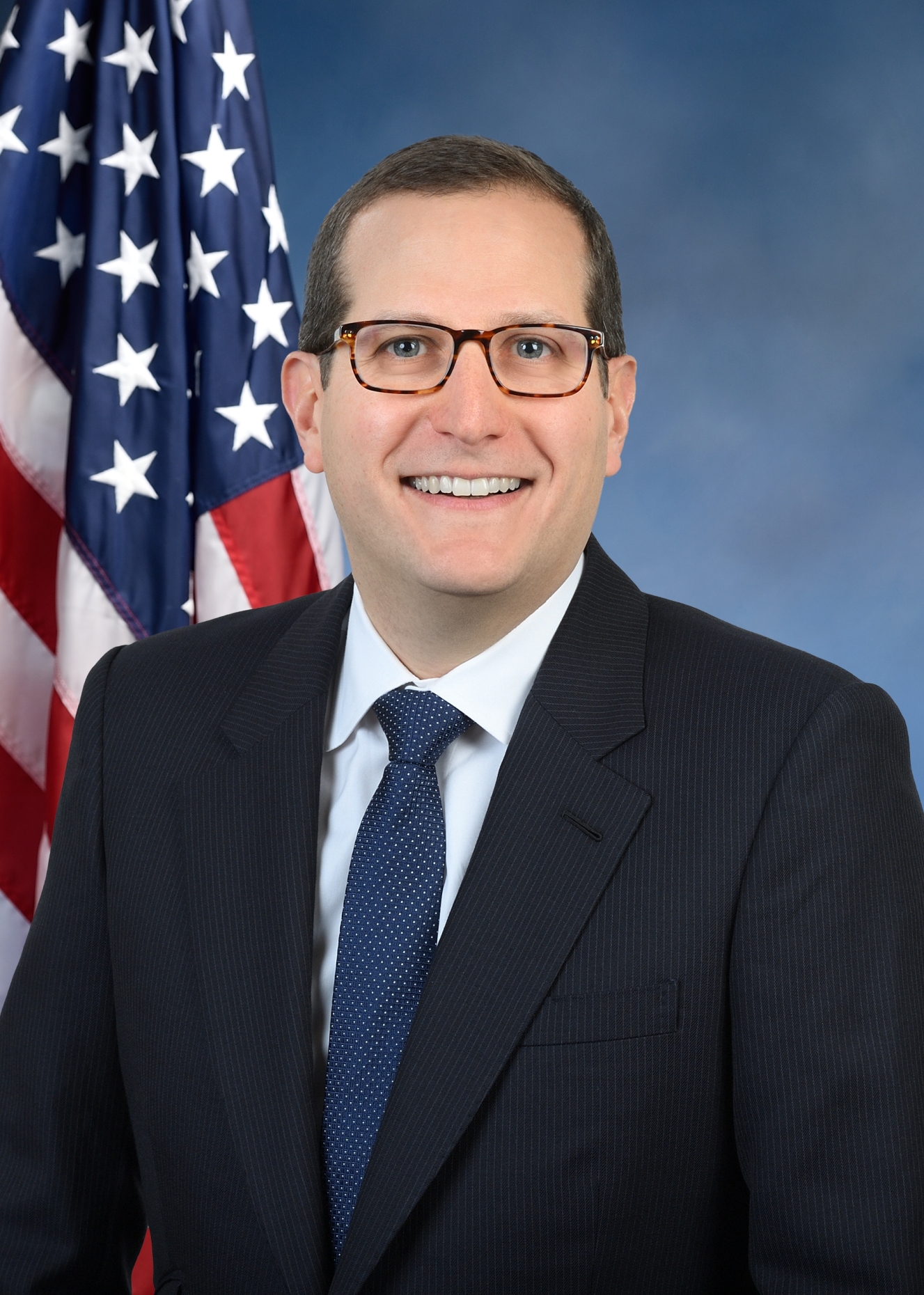
I you know, I'm very proud to represent the most Jewish congressional district in America or to hopefully rep
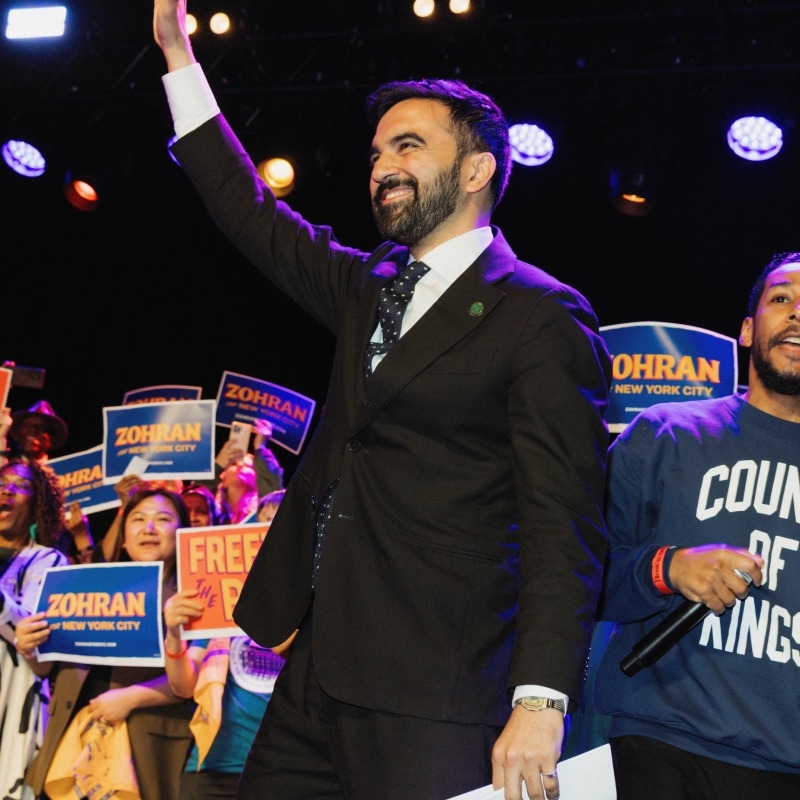
Hungry for a new kind of politics. They are hungry for a politics that understands working people should be at the heart of it. And they're hungry for a politics that looks at the wealthiest city and the wealthiest country in the history of the world and understands that it's unacceptable that one in four are living in poverty.
Well, look. Talk about affordability. You talk about Israel. You talk about all these other issues that Democrats are litigating right now in these primaries. I think it's more a question of 2028 for the party because they're gonna have to figure out what the direction is in terms of their presidential nominee.
In the immediate term, what they tell me for 2026 is that they're just capitalizing on the backlash to Republicans, the backlash to Donald Trump, his his really low historically low approval numbers. So most Democrats, they don't wanna this conversation yet, this discussion yet, but it's coming and it's coming very soon. And one thing I'll note about about New York too is that the top house democrat and the top senate democrat are both from New York. Chuck Schumer has a decision to make. Is he gonna run for reelection in 2028?
If he does, he will very likely have primary challengers from the left, possibly even Alexandria Ocasio Cortez.
And I you're you're right. The big most important question is what it means for 2028. I think Hakim Jeffrey is looking at what it means for '20 January 2027 if he does become speaker because it's gonna make, his job interesting. Paging Kevin McCarthy. Much more on the Democratic Party results and what it means when we come back, including a new call to action from a moderate New York Democratic congressman.
We'll tell you who it is and what he said after the break.

Craig Ferguson is going coast to coast to unpack what it really means to be an American today.
What could possibly go wrong?
Craig Ferguson, American on Purpose. New episodes now streaming on the CNN app. Go to cnn.com/watch to subscribe or log in with your TV provider.
While many on the left celebrate mayor Mamdani's primary sweep last night, some moderate Democrats see it as a wake up call. New York congressman Tom Swazi told me the following this morning. People who do not support the Democratic Socialist of America wring their hands at cocktail parties while the DSA is organizing. It's time to wake up. Economic insecurity, climate change, and immigrant injustice are all real problems, and alternative solutions must be offered.
It's time for a great deal of hard work to out organize the extremists on the right and the left. My panel is back now. He knows the passion is on the left. The organizing is on the left and has been for years. The question is whether or not there is a future sort of Biden type of win in a primary largely or whether or not the moderates can overcome where the passion is right now in the party.
The number of them is dwindling and the passion of them at the word you used before about talking about the DSA folks, is also, also appears to be dwindling a little bit too. I think on the issue of Israel specifically, you look at the senate. I mean, last two years, you know, since October 7, of 2023, the senate has held multiple votes on, ending certain weapon sales to Israel. When Bernie Sanders first started forcing those votes on the senate floor, they got maybe eighteen, nineteen votes, you know, was a blowout type of thing, but Bernie Sanders wanted to make his point. By a couple of months ago, which was the last time that they had these votes that Bernie Sanders forced, the number was almost 40.
That's that's 40 out of 47 democratic senators voting to cut off certain weapon sales to Israel. So you see that sort of that sentiment building and a lot of these senators who voted for those what are called joint resolutions of disapproval, did so because they realized that's the direction their party may be heading, not necessarily because they intellectually agree with the idea of it, and so they're they're having to sort of adapt to what is a new Democratic party and looking ahead to 2028 in the process.
Yet also in New York City, Michael Lasher, who is definitely not a Democratic socialist. He's a progressive, but he's like a regular progressive. He's an establishment figure. He worked for years for the outgoing congressman Jerry Nadler. He's not there.
Now maybe it's because that's not where his what will be his district is. Listen to what he said this morning.
I, you know, I'm very proud to represent the most Jewish congressional district in America or to hopefully represent the most Jewish congressional district in America pending the results in November and ran as a as a very proud Jew. And I think, there are real questions, real concerns that, people in my community and Jewish community around the city are feeling about antisemitism being normalized, and that is something we're gonna have to confront.
Despite this being Zoram Mamdani's district that way, this and Gracie mentioned, this was the race he did not get involved in. He didn't. And there and and, you know, there were other folks and factors in this race, but it was not this DSA moment. And as you noted, because the district is is a different district. This covers the Upper East Side, the Upper West Side Of Manhattan.
This conversation, I don't think is going away. Think that much we do know. Like, with this issue over support of Israel or disapproval of Israel is a a current that is coursing through the Democratic Party, and I don't know that it'll be determinative in a 2028 nomination rate race, but it's going to
be central to a lot
of the debates that we're gonna see.
And I think the conversation that Democratic strategists are having with these emerging campaigns is where do we land on taking money from APEC? Obviously, we know that folks like Cory Booker, who traditionally has been very close to groups like that, have shied away from it. We're seeing more and more of that question come up, and I don't think to David's point that that is gonna end anytime soon. And you're seeing across New York that it has been determinative in certain races. Yeah.
Alright. When we come back, Mayor Mamdani's top strategist, Morris Katz, joins me on last night's victories and what they may mean for what we've been talking about, the future of the Democratic Party. We'll also talk about another one of his clients, Graham Plattner. Stick around.
I'm doctor Sanjay Gupta, host of the Chasing Life podcast. Doctor Darby Saxby is a psychologist at USC who has been researching what happens to men as they become dads. How do their brains change? How do their hormones change? What happens to their mental health and to their other relationships?
Men are built with the brain architecture that can adapt to parenthood. I think of caring and parenting not just as traits that you're born either being good at or not, but as skills that you can hone through time and repetition and practice. And so women are really socialized to expect to occupy a primary parenting role, and we don't necessarily raise our voice with that objective in mind.
Listen to chasing life, streaming now wherever you get your podcasts.
Last night's primary results amounted to a big victory for progressives and democratic socialists and a pretty bad night for the democratic party establishment. Before the results were in, house Democratic leader Hakim Jeffries, also of New York, said this about the stakes.
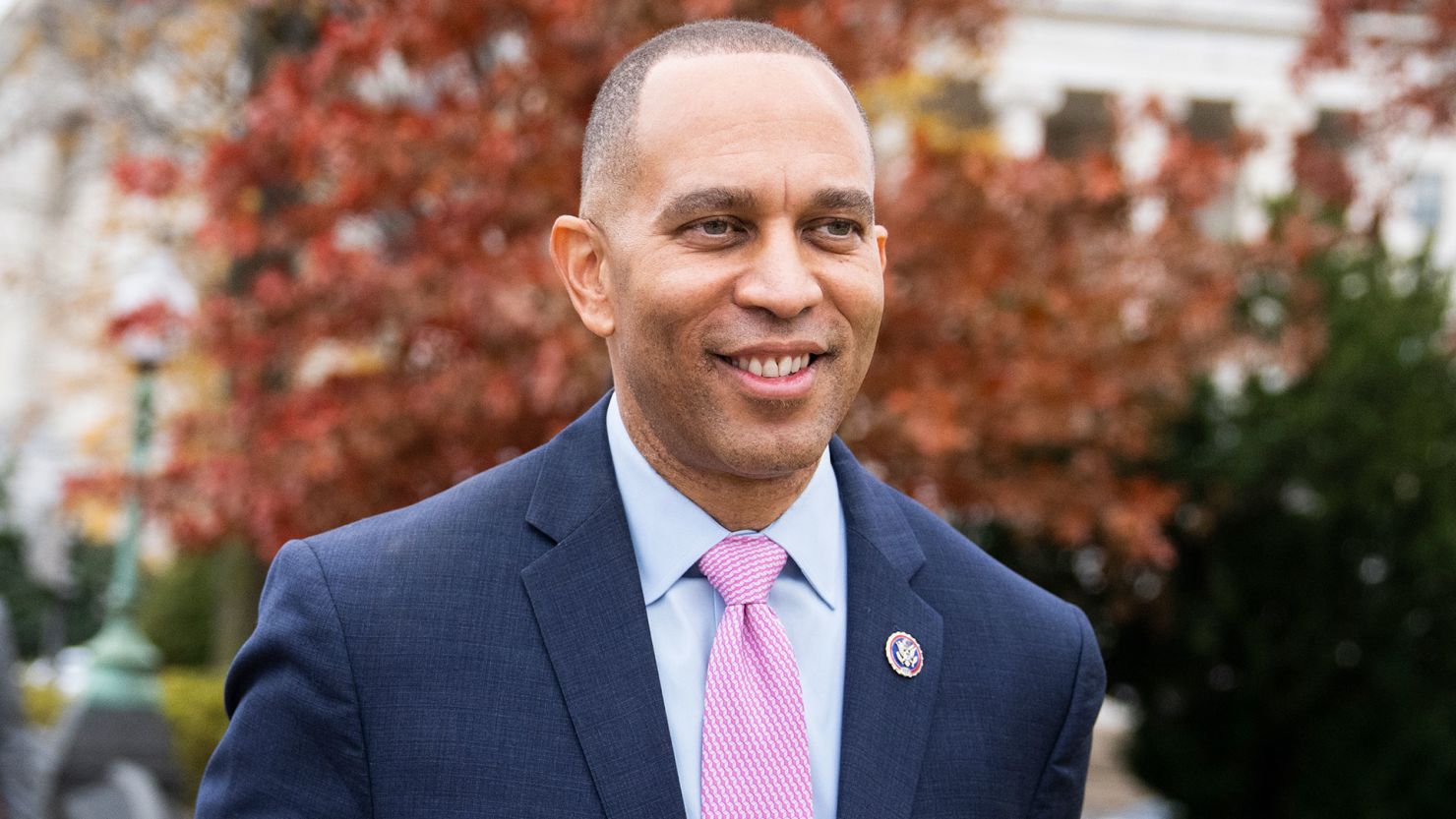
There are 215 members of the house Democratic caucus. A handful of primaries that go in one direction or the other in a given state or two aren't gonna reshape who we are as house democrats.
I'm gonna bring in Morris Katz, a top strategist for mayor Mamdani. Morris, thanks for being here. I should say you also worked, for a number of last night's winning campaigns, Michael Lasher, Brad Lander, Claire Valdez. I want you to respond to what Hakim Jeffries said about the way he sees, the House Democratic caucus and whether or not the votes last night will or should change it.

Like, I think it's leader Jeffrey's job to support his members, and those were before the results came in. And, you know, he's got a a lot of different interests through balancing at every moment. I think what's clear is that the mayor laid out a slate and a vision for a city that we could afford and to turn the page on a politics of big money and small idea. The same themes he ran on last year, but showing that it cannot be dismissed as a one year stand alone. It cannot be dismissed as a referendum by Andrew Cuomo, but rather it's the very politics that people are hungry for in this city.
And I think that if other Democrats don't wanna take lessons away from that, that's up to them. But I think it follows a pattern we're seeing across the country of a deep hunger for outsider candidates who are gonna challenge the status quo. We're gonna challenge a broken establishment and who are not just gonna take the fight to Donald Trump, but think about a vision for the Democratic Party that goes even further beyond that.
What's next? How do you grow the ideals, particularly behind the Democratic socialism beyond New York City and other deep blue cities? I mean, we've seen it here in DC and in Seattle, but how do you get beyond that?
I mean, to me, this is, less about any specific label and more about a fundamental question of who is our government going to work for and does it work? And I think right now, the answer is our government does not work, and our government works for the wealthy and the well connected, for lobbyists, for those with the money to buy power, and it doesn't work for anyone else. And we need to change that. And New York City, New York City, DSS had an incredible night last night, slates of candidates across the city winning. There are a lot of other places where you're seeing similar things, but I think it's not restricted to any one label.
And we, you know, we talk a lot about the party being a big tent party, and we should be. I think the question is what is that tent going to be, and can it be united around the affordability crisis and taking on corruption?
Well, you said that it shouldn't be one label, but it it some of the wins most of the wins that you and the mayor had in New York were people who did label themselves as democratic socialists, and it's because that aligns with their beliefs. And, of course, democrats, really they make up the vast majority of New York. I don't need to tell you that. Harris got, like, 70% of the vote in these places. Nationally, I just wanted to look at some of these figures.
Two thirds of independents oppose moving towards socialism. Is there a swing district, Morris, where you think a democratic socialist can win?
I think that we spend a lot more time talking about labels than the average swing voter thinks about them. You know, I think we've seen, the mayor's democratic socialist seems a proud democratic socialist, but you see people interact with policies, campaigns, and ideas not predicated on the label they're applying to themselves, but how are they going to make their lives better. And I think a politics that, you know, invests in domestic priorities in schools and in hospitals rather than in wars abroad, a politics that refuses to accept money, whether it be from corporations or lobbyists, people who are the architects of the crises we're facing right now. That is of what people are looking for. That's what people are hungry for.
And I think, you know, you can look at some of the people who've overperformed the most, over the last few years, even when coming short, people like John Kester and Sharon Brown. Those are more populous candidates than many of the Democrats we see, even in far safer seats. And I think we can have a big tent populous party where people can candidates and voters have the right to call it by whatever name they see.
Yeah.
But what people are looking for is a different kind of politics.
Right? But Sherri Brown and John Tester lost.
But they did overperform by margin with which if we applied that across the country, we'd have majorities in both chambers and certainly the White House, which we which we don't right now.
Yeah. Okay, that's fair. I I do wanna ask about Brad Lander, who you work for. He beat the incumbent Democratic Congressman Dan Goldman last night. Lander denounced an incident at Poetica Coffee where his opponent, Dan Goldman, who is Jewish, was told he's not welcome there because of his support for Israel.
I want to play what Mayor Mamdani said when he was asked about that incident.
I have many political disagreement with congressman go Goldman when it comes to his votes and his views on Israel. I think that what we saw online goes beyond.
Morris, that wasn't exactly a full throated condemnation on an incident against a Jewish congressman.
I mean, I think he was saying that it went beyond what he believes to be fair criticism. And so in the context of a press conference or something, it's easy to, you know, pull the clip or mince the words. But I think what he was saying is that, you know, we can have disagreements, strongest agreements as he does with congressman Goldman's policies, and also believe that there's not room for incidents like what we saw take place there.
There's a lot of debate, I don't need to tell you, about USAID for Israel, variations on what it should or shouldn't look like, but I wanna ask you about something more fundamental. Do you think any Democrat who supports Israel should be primaried and defeated?
Do do I believe that any Democrat no. I I don't believe that. I believe that we should any Democrat who is I think, that the democrats who are most closely aligning with APEC pose an electoral risk to the party.
But why? And why is PAC and not other why APEC and not other dark money organizations of various ill of various
I feel this is
same matters.
So question about Israel. I think the same thing can be true about many sectors, whether it be private equity or crypto. I think many of those apply the same. And I think when people, you know, talk about this issue, there there are a number of voters for whom this is a defining and important issue. But I think the shift that we're seeing amongst the democratic primary electorate, amongst general election electorates at large, is less driven by a, unilateral focus on Israel and more focused on them picking up on the dishonesty of the politics that comes with it.
And I think it's a belief that a politics that sells anyone out will eventually sell everyone out. And when you see politicians telling people to not believe what they see with their own eyes, when you see politicians saying, we don't have enough money to not cut Medicaid, but we have enough money to write another blank check to Netanyahu, that undercuts a faith in government. It undercuts a faith in ability to take on special interests. And I think that's where you're seeing this issue grow out of. And I think a lot of the politicians who then try to conflate the issue of criticisms of APAC or criticisms of Israel with antisemitism do a disservice to the ability to stand up to antisemitism, which is very real, which is on the rise, and undercut the ability to engage in that.
Yeah. And I think that there are legitimate criticisms of of everything and all of the above, but at the issue also is that there are there is a lot of conflating of what you just discussed going on. I wanna turn to Graham Plattner, and he is somebody who you helped find and recruit to run for senate in in Maine. A lot has come out about his past statements degrading women on Reddit, hit the tattoo, that turned out to be a Nazi related tattoo, which he, said he didn't know about, and he and he covered up accusations of aggressive behavior as a boyfriend and so on. Are you totally sure that nothing else will come out about Plattner's past that could be detrimental to his candidacy?
I think from the opening of this campaign, Graham has talked honestly and openly about getting home from war, about struggling with PTSD, about going through dark periods of his life. And the story he's told across Maine is one of redemption. One where he moved home on the same road he grew up on, met the love of his life, found hope through his community. And I think in telling that story, he has been honest with the people of Maine. He's been transparent.
And so if, you know, it's up to the voters of Maine of what they what they think is, you know, stories are talked about or litigated through paid media and TV ads. But I think the reality is Mainer is no Graham Plattner, and they know the same story he's been telling, which is one that's honest and one that's gonna happen when people who never thought they'd run for office.
Know I noticed that you didn't say I noticed that you didn't say no there. Just one last question. Did as somebody who helped recruit
him,
did you
do a full vet of him? Did you know about things that came out already? And does that also mean that there could be other things that come out regardless of the explanation that you just gave?
So there was a standard vet process was conducted, and I think that I'm not dodging a question there by not saying no. I'm kind of challenging a premise of which of what we consider scandal in the political landscape. And so, you know, people continue to litigate Reddit posts. Will people continue to try to look through moments of his life he's been honest about struggling with. I'm I'm sure the NRC and many will do everything they can to search, but I think that the voters have shown Graham who got more votes than any democratic nominee in the history of the state of Maine is that they know Graham Plattner.
They believe Graham Plattner. I think the scandals that people on the ground in Maine are focused on is a scandal of Susan Collins saying that she would protect Roe v Wade, then putting Brett Kavanaugh to the Supreme Court to overturn it, to scandal her enriching her lobbyist husband, to scandal her saying she's gone for two terms and not running for six.
Yeah. I I appreciate you saying you're not dodging my question, but you didn't answer the question. I also understand the arguments that you're making and that these are gonna be issues for the voters of Maine to decide, and it is going to be probably the most fascinating race we're gonna watch. Please come back, again, and we can talk more about this and everything else. Thanks, Morris.
Thanks for having me.
Coming up, president Trump is heading to Capitol Hill to break bread with Republicans after torpedoing their major legislative win, a big bipartisan win yesterday. Awkward. Stay with us. Any moment now, president Trump is expected to leave for lunch with the senate Republican conference. There may be some fireworks after the president helped oust two of the more popular Republican senators in primaries.
He's ramping up attacks on leadership for not killing the filibuster to pass his, what he calls Save America Act, which is new restrictions on voting. Not to mention just saying that he is not going to sign this bipartisan housing bill that passed yesterday. What do you suspect is going to happen in that lunch?
I mean, to be a fly on the wall would be very fascinating. One. Number two, Jonathan has acknowledged, you know, every time we ask him about this, he said, you know, the president, yeah, he's he's he wants to attach the Save America Act everything these days. Right? Kind of dismissing it as as an empty threat.
And the president has backed off of a lot of those threats. Right? But the recent ones that he's threatened like attaching it to an extension of FISA section seven zero two, which is still dark by the way. And what he said this
morning That allows the intelligence community to, to surveil, which they'd say
Warrantless wiretacking. Warrantless wiretacking.
Yeah.
An intelligence, community tool. And then what he did this morning saying he's not gonna sign the housing bill until the Save America Act reaches his desk. I I think the more interesting aspect of this though is not what John Thune can do because he can't twist enough arms to get rid of the filibuster. He himself doesn't wanna get rid of the filibuster. The issue is that Donald Trump, the leader of the Republican Party and the most influential figure in the Republican Party, can't even twist enough arms to get rid of the filibuster.
Well and and let's just drill down because we talked around it a little bit and because the president is making such a big big deal out of it. We've covered this a lot on this show, but because it's front and center, what is the Save America Act? Well, these are just some examples would require proof of citizenship to register to vote. Just for the record, you can't vote unless you're a citizen, and part of the rub here is that it's not so simple in a lot of places to prove citizenship photo ID when voting. This is like an 8020 issue.
A lot of Democrats support that part. States take more steps to remove ineligible individuals from voter rolls. Election officials face criminal penalties if they register a person who has not met bills proof of citizenship requirement. And then there's also, as Andrew, you mentioned earlier in the show, the idea of mail in voting, which he can't stand even though in a lot of places that are very red and rural, it helps Republicans and the president will have some allies in that lunch today. Speaking of Senator Mike Lee, some we talked about earlier to advocate for him and turn to his Republican colleagues and say, why aren't you supporting this bill?
But if you talk to Republicans privately, a lot of them don't even like this bill because of the mail and voting component because of this idea that it not just isn't going to suppress people who are Democrats, but it will suppress people who are also Republicans affecting their own races. And so there are a lot of reasons, not just a filibuster of why this thing is not gonna get passed. I mean, could talk to a wall in Congress right now. We'll tell you it doesn't even have enough votes, but yet you're gonna see the president and some of his allies on the hill today really trying to pressure and make it happen. And it's just that senator John Thune, not him personally, I've been told by, White House officials, but it's that he's in that role Yeah.
Which is why he is getting his feet put to the fire right now. Final quick word.
I I am so fascinated to hear what comes out of this because John Thune is in an entirely different moment in his relationship with Trump when than when this congress started.
Thanks, everyone. What an hour. Thank you for joining inside politics. You gotta stick around to see what happens in that launch. CNN New Central starts after a break.
From the descendants of history makers involved in the Louisiana Purchase to the Lewis and Clark Expedition, discover the untold stories of American expansion in the CNN original series, This Land, now streaming on the CNN app.
No claim selected
Click an underlined phrase in the transcript to see the fact-check here.