
Fresh Air - How Silicon Valley has profited by aligning with MAGA
44 claims analyzed
Transcript(44 claims)
On Consider This, NPR's afternoon news podcast, we cover everything from politics to the economy to the world, but every story starts with a question. At NPR, we stand for your right to be curious, to make sense of the biggest story of the day, and what it means for you. Follow Consider This wherever you get your podcasts.

This is Fresh Air. I'm Teri Gross. In the early days of Internet startups, tech innovators in the Silicon Valley were seen as young idealists who developed their creations in their garages, bedrooms, or at the universities where there were students. But recently, many Silicon Valley leaders have become identified with the right, with president Donald Trump and MAGA. These tech billionaires are now often referred to as oligarchs because of their money, power, and access to the White House.
How and why this alliance was formed is the subject of a new report in The Atlantic by my guest George Packer. He shows how lucrative this alliance has been for the venture capitalists and for Trump. Packer writes that Trump's crypto wealth has grown by at least 7 and a half billion dollars since 2024. His article is titled The Venture Capital Populist, How David Sachs and the New Tech Right Went Full MAGA and captured Washington. Sachs co founded the venture capital fund Craft Ventures.
He served as president Trump's special adviser for artificial intelligence and cryptocurrency. He's now co chair of the president's council of advisers on science and Technology. Sachs was an early investor in Facebook, Uber, SpaceX, Palantir Technologies, and Airbnb, was PayPal's first head of products, and served as COO. He's also one of the hosts of the tech podcast All In. George Packer is a staff writer at The Atlantic focusing on American politics, culture, and US foreign policy.
He previously was a staff writer at The New Yorker. He won a national book award for the unwinding, an inner history of the new America. His latest book is the novel, the emergency. George Packer, welcome back to fresh air.
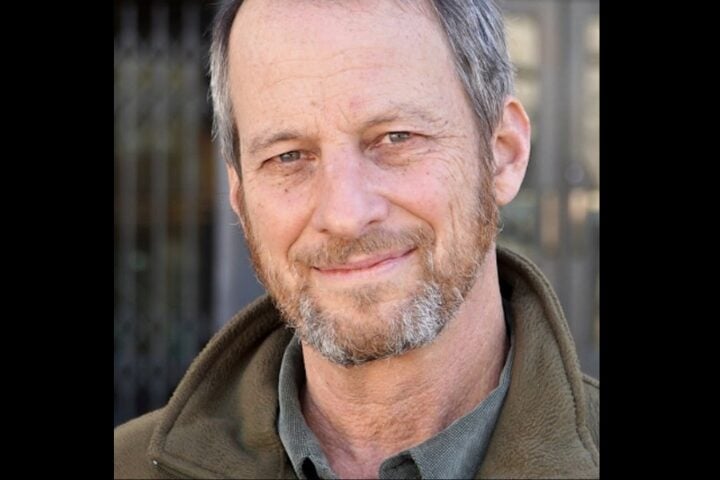
Good to be back with you, Terry.
I wanna start with a clip, and this is a clip of Sachs speaking at the White House in March 2025. The occasion was a cryptocurrency summit at the White House.

Thank you, mister president. We're all here today because of your leadership, your vision, and your generosity. I really wanna thank you for that. We're also here because of your desire to make America great and to introduce a golden age in America, including for digital assets. And we're here because of your love of of innovators, or as you might say, high IQ people.
Yeah. IQ. Know you love high IQ people. We about 30 of them here in the room today. These are the top people in digital asset industry.
And one other thing that I think that you love is legal fairness. This is an industry that was subjected to prosecution and persecution for the last four years, horrible lawfare, and nobody knows what that feels like better than you do. So we really appreciate the fact that you understand legal fairness and that you're always willing to fight for the right for the right thing, for legal fairness. You never back down. You stand defiant even in the face of an assassin's bullet.
It's an inspiration to everyone in this room, I think. So it's an honor.
So that was recorded in March 2025. You described Sachs as a venture capital populist. Why did you put those two usually oppositional words together to describe him?
It's a bit of an irony because I don't think the two are compatible, and I think we're finding out almost by the day that they are not compatible. But I put them together because Saxe puts them together. Following the January, which he called an insurrection and which he declared would finish Trump in national office and put him in an ignominious place in history, He was quite categorical about that. Very quickly, Saxe began to creep back from that position and to make amends with Trump and with MAGA. He didn't support Trump right away for 2024 for the Republican nomination.
He was for Ron DeSantis. But in his public words, in in in what he said on his podcast, it was clear that he was trying to align himself with MAGA. So he began talking about things that you never heard him talking about before, such as our terrible trade deals, mass immigration, free speech, by which he meant the big platforms, Facebook, Twitter, banning Trump and other right wing purveyors of falsehoods. For Saxe, that was, kinda like the big red line that he claimed made the left unacceptable and brought him back into sort of a tolerant position, eventually, in a a really sycophantic position toward Trump. But those are the the things he began to talk about, and then he began to say, I'm a populist.
And he actually quite openly said, I I'm on the side of the working man. I'm on the side of the working class against the elites. Now who are the elites if not David Sacks? Well, the elites are the heads of tech companies who are, to Sacks, are kind of giving in to the woke younger staff who are putting pressure on them to say these things. He is a is for the working man against the the tech oligarchs as he calls them.
So there is this underlying irony that you can't get away from. But Saxx uses the word populist, so I used it because it basically was his effort to form an alliance between the tech industry, Silicon Valley, and MAGA.
Well, you use Saxx as a kind of stand in for the tech billionaires who have become aligned with MAGA. So what changed? Why the sudden shift from people who used to support Democrats, even if they identified as libertarian, when it came to Democrats versus Republicans, the political support often went to the Democrats. So how do you account for the switch to Trump?
I think for Silicon Valley, libertarianism has always been the default political view. But it's not a hard edged Milton Friedman, Friedrich Hayek kind of libertarianism. It's softer. It's a liberal libertarianism. You know, the the issues that got support in Silicon Valley, where, by the way, I grew up before it was ever called that, pro choice, pro immigrant, pro gay marriage, for socially liberal causes.
I think what happened was the Biden administration came in and began to push harder on issues like monopoly. They had a much more robust antitrust posture on enforcement of laws against money laundering in the crypto industry. They were more wary of AI, although supportive of it. Also wanted the federal government to have a role in making sure companies were testing it for safety and sharing the results of those tests with the federal government. So all those things, I think, began to drive tech leaders and investors who were used to a free hand in their own business crazy.
That's like they couldn't believe that someone was actually telling them how to do their business because that had never happened before. Tech has been totally unregulated, which is why there's a crisis of social media among American teenagers. And I think that change coincided with a cultural change that I call the new progressivism, others call it wokeness, that caught on in Silicon Valley, especially among younger engineers and staffers at these companies, and that kinda began to push hard against their leadership. And some of the leaders, you know, kind of compromised with it, gave into it, said, we'll do what you want. We're gonna start monitoring speech in our internal deliberations, etcetera.
And all these things, I think, for a certain number of very powerful tech people, were just unacceptable intrusions on their right to rule, to rule their industry. It was just an unacceptable affront to have young people, the left, the federal government pushing hard against their business, and that led them all the way over to Trump.
You write that the courtship between Silicon Valley and MAGA consummated on 06/06/2024 in San Francisco's Pacific Heights neighborhood on a street known as Billionaires Row at the $45,000,000 French limestone mansion of venture capitalist David Sachs. So what was this dinner? It was a fundraising dinner. Why was this so pivotal in creating the alliance between Silicon Valley billionaires, venture capitalists, and Trump and MAGA?
Well, as Sachs said on his podcast just a week before the fundraiser, he knew that a lot of people in the tech world, people up at his level, and by then, he was one of the leading venture capitalists, were for Trump. But they were afraid to say so because it was still socially a bit unacceptable in their world. It's not something you announced at a dinner party. You didn't tell your employees, but it was something he knew from internal conversations. And he wanted them to come out of the closet.
He wanted to make it socially okay to be for Trump. And he believed that this fundraiser where especially a lot of crypto executives, but also investors and people in other parts of the tech industry would have a chance to meet Trump, to hear him out on tech, and to try to influence him, that they'd be there, and they were there. And it raised something like $12,000,000, and J. D. Vance was there too, by the way.
And Saxe had played an important role in bringing Vance into the sort of inner circle of Trump along with Don Trump junior. So there was a kind of a a coalescing of these two worlds, Trump world, tech world, that Vance represented part of, and that Sax was instrumental in sort of catalyzing.
And I just wanna interject here that for people who don't know or who have forgotten that Vance used to work for Peter Thiel, and Peter Thiel was a founder of PayPal and is one of the billionaire venture capitalists.
And we should talk about Peter Thiel because he has played a very important role both in JD Vance's career, but also in the life of David Sacks. They were at Stanford together. Thiel is a law student, Sacks is an undergrad. They were on the Stanford Review together, which was a conservative publication that Thiel founded, and they co wrote a book called The Myth of Diversity, that was sort of an anti PC as the term was back then. This was in the mid nineties.
Anti PC, anti multiculturalism diatribe against sort of the takeover of elite higher education by the left. And it was kind of consciously in the tradition of William f Buckley's God and Man at Yale, except it was the left at Stanford. And it got them both a lot of attention, and I think it formed a bond between them. And so when Thiel cofounded an online payments company that became PayPal, cofounded it, by the way, with Elon Musk, He brought his friend David Sachs in as the chief of products, and Sachs played a very important role in developing email as the system of payments. And he he was a a big part of what came to be called the PayPal mafia, which was a lot of Stanford grads plus Musk who had been on the right at Stanford.
Many of them were conservatives, not all of them. Reid Hoffman, a liberal, was also part of PayPal. And it was a hugely important company in sort of bringing Silicon Valley from its earlier era to the era that we're still living in, what's called Web two point o, the era of Facebook, of of these online platforms. And PayPal survived the dot com crash of two thousand and made all of the people I've just mentioned rich and set them off on their course as entrepreneurs and investors, including Sachs.
At this fundraising dinner, they raised $12,000,000 for Trump. And then when Trump was in office, I'm quoting you here. Back in office, he pardoned convicted crypto executives, neutered consumer protections, ended investigations by the Security and Exchange Commission into crypto firms with ties to Trump's businesses, and disbanded the Justice Department's crypto enforcement team. That seems like a lot. How quickly did he do all of that?
I mean, within the first six months, it was a very quick payback to the crypto industry for their support. He became their biggest champion. He said he was going to make The US the crypto capital of the planet. In other words, whatever you want. And in turn, the crypto industry has increased Trump's wealth by orders of magnitude.
As you said at the start, his paper wealth in crypto has increased by $7,500,000,000 according to some sources since he began to invest in it in 2024.
The first related thing that Trump did in office related to AI or crypto was to push through congress a bill that would create a regulatory structure for crypto, and this was through the Genius Act. What did this do? Like, how did he tie a regulatory structure for crypto in a way that actually benefited crypto? Because, you know, the the venture capitalists don't want government regulation, but in this case, they wanted some regulation.
Right. I think they wanted and they said this over and over. They wanted certainty. They wanted to know, where the the lines were drawn on what was allowed, and they blamed Biden for failing to do that, for keeping everything uncertain so that in their view, it was very easy for crypto firms to cross a line and find themselves on the wrong end of a federal investigation. And this was the first and really the only piece of legislation that Trump passed, major legislation on technology.
Because as you say, the rest of it was keeping the government's hands off. In this case, the Genius Act required these private issuers, these crypto firms, to have one to one backing for their currency called stablecoin, which has different names, different there's different varieties, but it is a coin whose value is supposed to remain constant. It required them to have dollar or short term treasuries or some other reliable backing for the stablecoin currency that they issued. And so that seemed like a good way to make sure that the industry didn't have sudden, you know, collapses, bankruptcies, etcetera, because it turned out there was nothing behind these these digital assets. Critics say that the danger of the Genius Act is that it ties the federal government to crypto in a way it was not tied before.
And so if crypto turns out to have major failings, it could pull down parts of the regular banking industry, and it would require the federal government to intervene. And they also accuse it of not providing enough guardrails to prevent crypto from being used for for fraud and and other illegal purposes.
Well, then the Genius Act is certainly a boon to the venture capitalists who are invested heavily in crypto companies.
It is. That's why they wanted it. Yeah. That's why they wanted it. I have to say it was a bipartisan bill.
There were a lot of Democrats who voted for it as well, and then there were some Democrats who were vocal critics like senator Elizabeth Warren who considered it a gift to the crypto industry and a potential a better of fraud by the crypto industry. So this digital currency, this digital asset that has become the main tool of enrichment for the people pushing these policies is now going to have the backing of US currency and potentially of the US government. And that opens up a kind of whole world of conflicts of interest and puts a shadow over the whole thing. Crypto is not showing itself to be the currency that, you know, will liberate mankind from the tyranny of the banking system, which was kind of the original libertarian view of crypto. PayPal's original vision founded by Peter Thiel and Elon Musk was a a vision of private currency being liberated from the onerous regulations of governments.
And that would allow people who did not have access to reliable banking to have access, including in poor and corrupt countries. Well, that's the sort of idealistic version. But in turn, it turns out in practice, it's become much more of a speculator's game and, of a money launderer's game.
Another advantage for venture capitalists invested in crypto companies, Another advantage of tying crypto stablecoin to the American dollar is that it makes it seem like investing in stablecoin is safe because it has some connection to the American dollar. And the more people who invest in stablecoin, the wealthier the venture capitalists invested in stablecoin become.
Right. And Sacks, I think, said that one of the things the genius act would do is to make the dollar the global digital currency. In other words, if we're moving toward a worldwide digital currency system, The US should lead it, should dominate. The dollar should be the currency of that system, and the Genius Act would make it so. I don't know that we have enough evidence yet to know whether that has played out.
But one thing that we do know is that crypto remains incredibly volatile.
We need to take another break here, so let me reintroduce you. My guest is George Packer, a staff writer at The Atlantic. We're talking about his new article, the venture capital populist, how David Sachs and the new tech right went full MAGA and captured Washington. We'll be right back after a break. I'm Teri Gross, and this is Fresh Air.
You describe the tech billionaires as almost a parody of crony capitalism, signaling the final union of America's interests with those of its wealthiest citizens. Tech power fused with state power. Can you talk about that a little bit more?
Well, think of the lineup behind Trump at his, second inaugural. All of the the tech CEOs and others who were jockeying to be the seated closest to Trump because closeness and proximity means power. Think of who Trump named to this commission that Sachs now co chairs since he stepped down as as the special adviser, the commission on science and technology. Who's on that commission? Jensen Huang of NVIDIA, Sergey Brin of Google, Mark Zuckerberg, Marc Andreessen of Andreessen Horowitz, Venture Capital, Michael Dell of Dell Computers, one of Sax's fellow cohosts on the All In podcast, who's a billionaire investor, a crypto CEO, and Larry Ellison of Oracle, whose son now has a huge role in controlling media.
It was as if they were saying, we're not gonna even try to pretend that there is any daylight between billionaire industrialists and the White House. They're practically one and the same. I think there's one academic scientist on that 15 person commission, which you would expect to be more the norm for a commission on science and technology. That means the public interest is not represented. What's represented is the interest of one part of American business.
And that is a kind of corruption in itself. It may be legal corruption, but it's institutional corruption because it is perverting, skewing a public trust toward private ends. And that has been what we've seen Trump and Sacks doing throughout the year. And it's shown that Trump, for all of his connection to a base that is largely working class and that has put him into office twice now, Trump's real affinity is with plutocrats. And I think Saxe knows that and and and used it, exploited it.
And I hope we'll talk about why this might not be good for Trump and for his movement. Because I think it's it's actually leading to a real fault line that's opening up between Trump and his mass base.
Steve Bannon agrees with you.
Yeah. We had a nice chat, Steve Bannon and I, and he said some typically incendiary things. And one of them was that David Sacks, whom he is on record as really disliking, if not hating, has been the best thing that could have happened to MAGA. Because as Bannon sees it, Saxe's maneuvering in favor of the tech industry has been so blatant and clumsy and incompetent that he's made, what Bannon calls the AI supremacists look bad, that he's defeating his own cause. And I heard this from others too.
One former official said to me, yeah, he's won the battles. He's gotten crypto the backing of Washington. He's got kept Washington's hands off AI, but he's losing the war because he's actually alienating some important parts of the MAGA coalition, including members of congress who Sacks sort of pushed hard to prevent bills or amendments that would have put American companies ahead of China for those valuable AI chips, an amendment called the Gain AI bill that was defeated, because Saxe and Trump, decided to tell the congressional Republicans that they didn't want it. Well, this was a very popular idea to have American companies ahead in line of China, but no. That's not what Nvidia wanted.
It's not what Saxe wanted. It's not what Trump wanted. These are policies that are alienating what you might call the true populace in MAGA. And Steve Bannon speaks for them. The others don't really speak out because they don't wanna get crosswise with Trump.
But you can see the administration beginning to realize it has a problem with its own populous base. This week, the White House announced that it's considering requiring AI companies to share the results of their safety testing with the federal government. Exactly the thing that Trump and Saxe got rid of that Biden had done when they came back into office. So I think there's a genuine worry among some of the smarter political minds around Trump that Saxe has actually been bad for politics. He may have been good for business, but he's been bad for politics.
And they need to start backtracking because they've gotten way out ahead of the American people who are actually quite worried about the effects of AI.
There's speculation that the left and right might unite against the venture capitalists.
Well, you know, there were some bills in congress or some amendments that were cosponsored by a far right MAGA senator, Jim Banks, and a far left Democratic senator, Elizabeth Warren, not far left, but progressive, let's say, that would have done what the AI industry did not want done, what NVIDIA didn't want done, and put American companies ahead of China in line for advanced AI chips. This is a small thing, hardly got any attention. The White House crushed it, But it's the kind of thing that's gonna keep happening because the public is so alarmed about data centers coming into their communities, about chatbots stealing away and maybe even harming their children, about AI agents wiping out whole sectors of white collar jobs. All of these things have been completely ignored by the Trump administration, which has done nothing to regulate AI. They claim that they want to bring in some kind of federal structure, but they've done nothing.
In that vacuum, there's a public alarm that's growing, and some people said to me, AI will be the number one issue in the twenty twenty eight presidential election. And if that's true and if J. D. Vance is the candidate, he's gonna have some explaining to do because he has been one of the biggest let the private sector cook advocates in AI. And that doesn't seem to be a winning political position with either Democrats or Republicans right now.
It's a bipartisan recoil against both the technology itself and the amount of money that is flowing into AI investors and executives, the incredible levels of wealth that are flowing upward while ordinary Americans continue to struggle.
Well, we need to take a short break here, so let me reintroduce you. If you're just joining us, my guest is George Packer. He's a staff writer at The Atlantic. We're talking about his new article, the venture capital populist, how David Sachs and the new tech right when full MAGA and captured Washington. We'll be right back.
This is Fresh Air. So David Sacks, made a very provocative statement about immigration. And do you wanna describe what he said?
Yeah. This was on his podcast, and I I listened to many, many, many hours of All In because Saxx himself wouldn't speak to me, and so I thought the best way to find out who he is and what he thinks would be to listen to him on, on his podcast. And at one point, they were talking about I think it was during the the height of the Minneapolis ICE crisis, which, by the way, Sacks essentially defended the conduct of ICE agents in the deaths of Alex Pretty and Renee Good.
He blamed Antifa, didn't he?
He said that this was Antifa style operations intended to prevent federal agents from carrying out the roundup of criminal aliens, which the public elected Trump to do. So for him, this was, like, a political organized effort to stop legitimate law enforcement actions that the public voted for. And we could go through some of his views of other Trump policies because one after another, he lined up right behind Trump on on everything Trump has done in the first year. But on immigration, he said to his cohosts, look. If we were just talking about letting in immigrants with a 150 IQ, and then he cited Elon Musk and Jensen Huang of NVIDIA, we wouldn't even be having this argument.
And in another place, he has said, the only way to ease the public's fears of immigration is to stop this mass immigration of people with average IQs, and instead only let in these titans of technology with high IQs. Elon Musk from South Africa, Jensen Huang from Taiwan. And then the public will see that immigration and technology are in to their benefit. And so the real problem with immigration is that we're letting in subpar people who aren't smart enough to, to contribute to the country. We should only be letting in the masters of the universe.
There have been periods when and and there's still special visas to come in if you are considered special or are considered somebody who would be an asset to, you know, medicine or science.
They're called h one b visas, and there's a big argument at the beginning of the Trump, second term over whether those should be continued. Elon Musk wanted them because they're important for his sector. Steve Bannon was virulently opposed to them. And this again is where the populist side of MAGA and the tech side of MAGA have real differences. And now because immigration has been brought to a near standstill, there's all kinds of industries that are quietly or not so quietly telling Trump, you're really hurting us.
Hospitality, construction, but also medicine, and also tech. Because it turns out that with our declining population, our aging and declining population, and with sectors of the country that are in decline being where there's the fewest immigrants. Immigration turns out to be part of what makes America prosperous, but that's something that David Sacks probably knew all his life until he stopped knowing it around the time that he began to get close to Trump and MAGA.
You've confessed that crypto is not your thing. Like, you don't you don't fully understand it. But you wanted to write about the tech venture capitalists who are invested in crypto and AI and their alignment with MAGA and president Trump. Why did you wanna write about this alliance?
Because it's important, Terry. It's it's hugely important. And even if I'm not the world's best expert, I do have a nose for politics and power and where power flows and where it's flowing in a way that just doesn't seem quite right. And it just began to seem inescapable to me that with Trump's return, power like we may maybe have never seen and wealth like we maybe have never seen was flowing into the hands of a few people who had aligned themselves with Trump. And one thing I do know something about is democracy.
I care about it. And that concentration of power and money is the enemy of democracy, and we've seen this over and over in our history. We saw it at the beginning of the twentieth century with the robber barons in the Gilded Age, and that's why decades of reform and legislation from the progressive era to the New Deal changed American politics because ordinary people saw that the deck was stacked against them and that democracy itself was under threat, not just economic inequality, but the the concentration of power in a few hands of people who could then arrange politics and policy to their benefit. That's happening again. It's happening right in front of us, and it's happening most dramatically in this alliance between Washington and Silicon Valley.
So even if crypto makes my head spin a bit, I I couldn't ignore it. It's too important to just let it happen and then gnash our teeth afterward.
One more thing. Thinking back to years ago, during the war in Afghanistan, I think you wrote a lot about people who from Afghanistan who were helping The US troops as interpreters, as guides, as fellow reporters. And, their lives were at stake, and a lot of them needed to get out. And they weren't always getting refugee status or weren't getting it swift enough to protect them in in in The US. Have you kept in touch with any of those people?
For sure, Terry. With a number of them, and especially with one family who I've written about over and over again. Husband and wife, Afghan young Afghans in their twenties. She is a Hazara, which is a very highly persecuted Shia minority in Afghanistan. They both served in the Afghan military.
And as soon as Kabul fell, their lives were in danger because they were seen as enemies of the regime and maybe even as heretics because they had a mixed marriage. He was a Tajik Sunni. She was a Hazara Shia. They began to flee from house to house and even mountain cave to mountain cave in the center of the country. She was pregnant.
It was a terrible situation. I would have these conversations with them on WhatsApp where she would say, I don't know if my baby is gonna survive. I don't know if I'm gonna survive. I I can feel the walls closing in. I don't know where to go.
So I wrote about them over several years. They ended up in Pakistan where they became refugees, but that was not the answer to their prayers because they were in line for resettlement in this country as former allies, people who had fought alongside Americans and whose connection to America was what put them at risk in Taliban controlled Afghanistan. And instead of making good on our promise to them, when Trump came back, he closed the doors and locked them so no Afghans can get into this country. And this family was about to be resettled with two very small children. And instead, they're trapped in Pakistan, which is turning against its Afghan refugee population.
There's now a kind of low grade war between Pakistan and Afghanistan. Afghan refugees are being deported back to the danger of Afghanistan in the hundreds of thousands. And this family was in hiding for many months from the Pakistani police so that they wouldn't get deported. And I sort of, in writing about them, also just got pulled into their story and began to try to help them get out of Pakistan. And I will be telling readers of The Atlantic what the final outcome of my efforts and of their efforts to get out of Pakistan have been.
I'll just say it's about the only story I've been a part of or written about in the last years that has made me feel pretty good about the future.
Well, that gives me a bit of a preview, and I'm really glad to hear it. George Packer, it's a pleasure to have you back on the show. Thank you so much.
Thanks for having me, Terry.
George Packer is a staff writer at The Atlantic. His new article is titled, the new venture capital populist, how David Sachs and the new tech right went full MAGA and captured Washington. Our interview was recorded yesterday. After we take a short break, David Biancooley will review the new TV adaptation of Lord of the Flies. This is fresh air.
Since its publication in 1954, the William Golding novel, Lord of the Flies, has been one of the most popular books on many high school reading lists. It's about a group of British schoolboys who survive a plane crash on a remote island and are forced to figure out how to sustain themselves without any adult supervision. Two movies have been made from the story in 1963 and 1990, but now Netflix and the BBC present the first adaptation for television. It's a four part drama already shown in England and now on Netflix. Our TV critic, David B.
Ancooley, has this review.
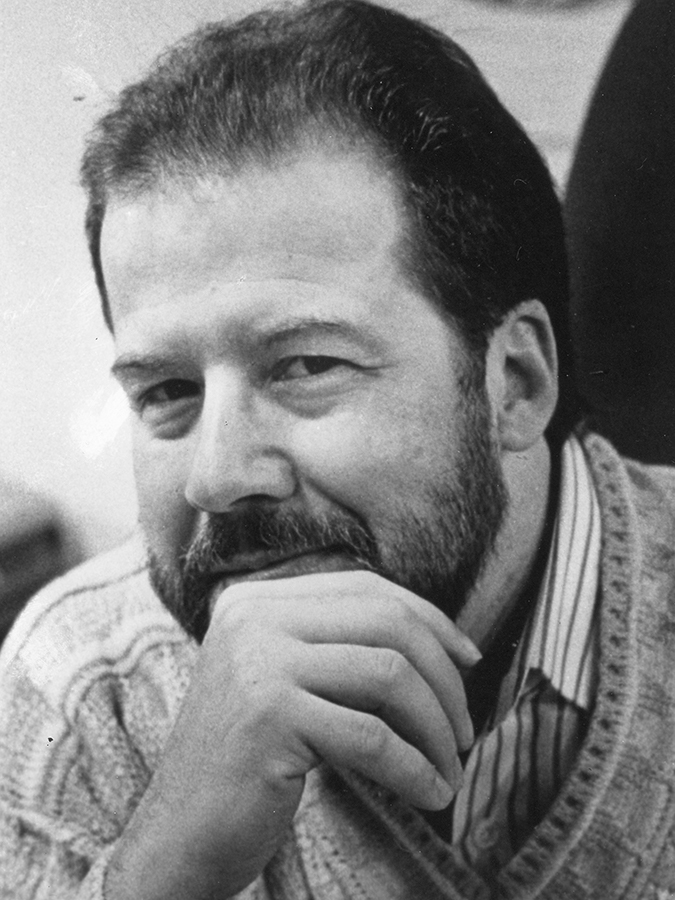
All four episodes of this new Lord of the Flies miniseries come from the same creative team. Mark Mundon directed all four hours, and Jack Thorne wrote them for television. Most of the show was filmed on location in the dense rainforest of Malaysia, and London makes the most of it, so the series looks great. More than that, though, this TV, lord of the flies, is such a faithful rendering of the book and relies so much upon the acting and credibility of its fresh young cast that Jack Thorne deserves most of the credit for trusting the source material and his cast and writing such an unforgettable, sometimes haunting adaptation. The most unforgettable TV drama I've seen the past few years was another four part Netflix BBC offering, the Emmy winning adolescence.
That was cowritten by Jack Thorne, and lord of the flies can be seen as sort of a companion piece. Adolescence, about a young boy accused of murdering a classmate, was a stark emotional look at how social media can lead some young people towards hateful, even violent behavior. In lord of the flies, there's just as disturbing a descent into violence and murder, but in this case, it's the absence of social influences, not the influences, that result in savagery. This new lord of the flies begins like the TV series lost, which started with a close-up of a plane crash survivor waking up and making his way through the island jungle. In this case, it's a rosy cheeked young boy played so unaffectedly by David McKenna who wanders until he encounters another survivor played by Winston Sawyers.
The soundtrack by Hans Zimmer and others relies greatly on angelic vocal arrangements because one group of young boys who survived the crash make up the school choir.
You're right. Just been going too fast. I'll swim. What do I call you? I don't care what you call me.

As long as you don't call me what
they used to call me. What was that? Promise you won't laugh. Yes. Piggy.
Oh, my. Piggy. Piggy. Ralph. I'm saying This is a funny name, though.
Not that funny.
Just as in Golding's novel, the two boys, basically representing intellect and bravery respectively, make their way to the beach. Piggy finds a conch shell. In this British show, they call it conch, and tells Ralph to blow in it. The sound he makes summons other kids from the rainforest, and Ralph organizes a meeting. Then making a dramatic entrance comes the boys' choir from the same school still dressed in robes and singing.
They walk single file behind their young arrogant leader, Jack, who quickly challenges the other group. Ralph begins to show deference, but Piggy, even after being betrayed by Ralph, does not. Lox Pratt plays Jack.
We were on
the plane. That's more than I ever remember. And now we're trying to find some order so we can work out exactly what we know. You're talking too much. Shut up, fatty.
He's not fatty. His real name is Piggy. He's right, though. We do need to make some key decisions. It seems to me we ought to have a chief.
More important is to find out exactly where we are. A chief will decide that. I can be chief. I'm chapter chorister and head boy. I can sing high c sharp.
Almost in favor of me is I think we should have more than one consideration if a chief is to be decided. I can't sing c sharp, but, yes, I'd like to be chief. Of course, he would.
From that point on, the island descends into a sort of battlefield. Recently, the TV series Yellowjackets offered a variation on that same theme, the variation being that the plane crash survivors were teen girls, not young boys. As Lord of the Flies progresses, one group is responsible and civilized, building shelters and gathering fruit and water, while the other hunts for wild game and dons face paint like native warriors in old movies they've seen. Jack Thorne is stunningly faithful to Golding's original text except for allowing one ill fated child to live a little longer than in the book. Some sequences, like the first wild boar hunt, are filmed by Munden in a way that puts you right there with the boys.
And as the boys transform from frightened to feral, it's hard to shake and to forget. Adolescence was that way too. Lord of the Flies is a bit easier to watch, but both of them are bold dramas featuring amazingly good young actors that will grab your heart as well as your mind.
David Biancooley reviewed lord of the flies, the new four part miniseries, which is streaming on Netflix. Tomorrow on fresh air, our guest will be Nathan Lane. He's best known for his roles in the producers, the birdcage, and the lion king. He was just nominated for a Tony for his starring role as Willie Lohman in Arthur Miller's Death of a Salesman. He says it's the thing he's most proud of in his career.
I hope you'll join us. To keep up with what's on the show and get highlights of our interviews, follow us on Instagram at NPR Fresh Air. Fresh Air's executive producer is Sam Brigger. Our technical director and engineer is Audrey Bentham. Our interviews and reviews are produced and edited by Phyllis Myers, Ann Marie Boldenotto, Lauren Krenzel, Theresa Madden, Monique Nazareth, Thea Challoner, Susan Yukundi, Anna Baumann, and Nico Gonzalez Whistler.
Our digital media producer is Molly C. V. Nesper. Roberta Shoreok directs the show. Our cohost is Tanya Mosley.
I'm Teri Gross.
No claim selected
Click an underlined phrase in the transcript to see the fact-check here.