
The Weekend Intelligence - The Curious Case of the Missing Milk Supply
78 claims analyzed
Transcript(78 claims)
The Economist.

I remember the scene very distinctly. I was sitting with a group of women I didn't know in a large white room with strip lights and a few tables. A woman talked to us from the front while something was being passed round person to person. When that thing reached me, it turned out to be a knitted breast. It was really weird and completely ridiculous.
Then we were each given a doll, and the woman explained to us how to hold it, where to hold it, and how everything was going to work. That scene sticks in my mind because it's juxtaposed with another one a few weeks later. A scrunched up, floppy, starving, screaming baby who behaved nothing like the tranquil, rigid plastic doll. I had one job to feed her. Nothing had ever mattered quite this much, and it was bloody hard.
Before you move on, thinking that you have no wish to have a baby, or even if you do, you lack the requisite anatomy to feed one, please stay with me. Because if you're listening to this, logic suggests that someone once fed you and everyone you know. That's so obviously true that most of us don't even think about it. Yet it was almost certainly bloody hard for them too. That will have been partly because, like me, they had no idea what they were doing.
But also because it turns out that no one, not even the scientists, really know what we're doing when we feed a baby. And you thought life was precious. I'm Rosie Bloor. And today on the Weekend Intelligence, Slavae Chankova takes us on a personal journey. There's so much here that I didn't know.
Yet this is also my story, your story, everyone's story.
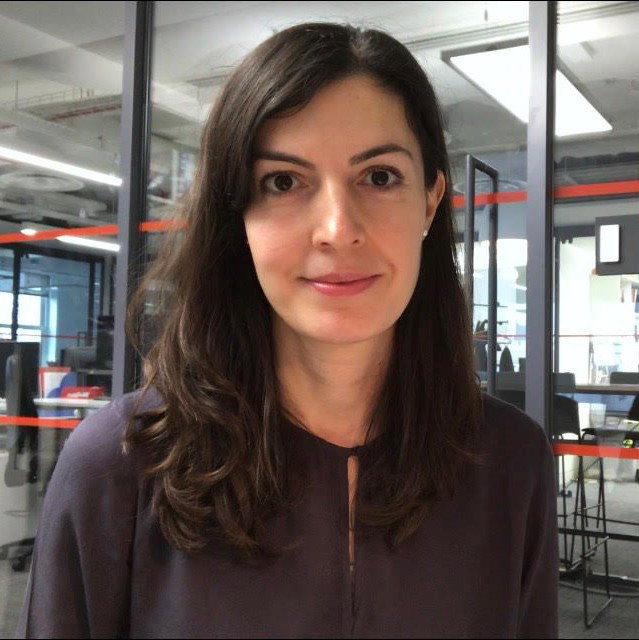
There is a photo I look at sometimes. It's me holding my daughter on the day she was born. It's in the hospital. I look exhausted. I've barely slept and I'm fresh out of the c section surgery.
But for the first time I'm feeding my baby. I'm holding her to my breast. She's latched on and on my face it's bliss. I'd later look at this picture and I'd wonder how did it all go wrong? The worry came quickly.
My daughter didn't seem to be sucking, just having a nap. I wasn't sure if she was getting anything. I kept asking the hospital staff, am I doing this right? Everyone had a different opinion. Hold the baby at this angle or that angle.
Her head is too far up. Her head is too far down. Or try squeezing your breast into the shape of your baby's mouth, whatever that means. Twelve hours after my baby was born, a midwife suggested we give her formula just for now, while we sorted out whether breastfeeding was working or not. Nothing was coming when I tried to get milk out by hand, which made me really worried.
Maybe I had nothing to give my baby. A little bottle arrived. My baby gulped down. And I never saw that midwife again. I was discharged from hospital a couple days after giving birth.
No closer to knowing how to breastfeed. And as far as the hospital was concerned, I never would. I looked at my discharge form. In a drop down list under feeding, staff had selected exclusive formula milk. There was no acknowledgement that I was still trying to breastfeed, which I really wanted to do.
That was the guidance. It was right there on the website of the National Health Service. Nothing but breast milk is recommended. Formula, it stated, doesn't offer the same benefit. So in the days and weeks after giving birth, I was determined to do whatever it took to make breastfeeding work and ditched the formula.
I looked for help from a range of health visitors, lactation consultants and whatever online sources I could find. No one had an answer for what I thought was a basic question. Is my baby getting enough breast milk? My confusion filled me with anxiety and guilt. Why couldn't all these people, the experts on caring for a new baby, tell for sure whether I had too little milk for my baby.
Was the problem me? Her? Both of us? There are 2,000,000,000 women on this planet who are of childbearing age. And yet, if you search PubMed, a big medical research database, for academic papers on low milk supply, you get very little.
I tried it. I searched for papers that had any one of a few terms: Low milk supply, low milk production, or lactation insufficiency. I got just over 300 results. Then I searched for papers with the term erectile dysfunction. I got 30 to a thousand results.
We can fly people around the dark side of the moon, but the science of feeding newborns, a science that affects literally everyone, everywhere, ever, is still underdeveloped. As a new mom, I was outraged. As a health journalist, I was intrigued. And I set out to discover why. This then is the curious case of the missing milk supply and my attempt to solve it.
We want our babies to be healthy and happy. Breastfeeding brings a mother's touch to bond, to comfort, to calm.
For years, public health campaigns have pushed women to breastfeed.
Breastfeeding was a great decision.
The message is clear: Breast milk boosts a baby's immune system. It prevents allergies. Apparently, it even reduces the chance of sudden infant death syndrome, which is every parent's worst nightmare. And if you're still not convinced
I'm 40 pounds thinner.
It benefits the mother too.
So what helped me get back to my target weight? I breastfed my baby. Breastfed my baby.
The World Health Organization recommends exclusive breastfeeding, no food or formula for the first six months of a baby's life. And most national health authorities suggest the same. But there was a time, not that long ago, when that was a radical idea.
It's pet milk, the first evaporated milk. Pet milk, the first food of millions of babies who
Formula, which was modified cow's milk, became popular after the second world war.
Good whole milk concentrated to uniform double richness with pure crystalline vitamin D. Sun
That was partly driven by social change. More mothers were working, but it was more than that. Formula was seen as scientific, progressive. Doctors recommended it as a more hygienic and reliable alternative to breast milk.

I think it's the legacy of that scientific motherhood approach, of the kind of marketing that formula is modern, it's well designed, it's actually kind of better than breast milk.
Joanna Woolforth is a historian. Her doctorate is in art history and she lectures at the Courtauld Gallery in London and at The Open University. She's also the author of An Intimate History of Breastfeeding.
More women are moving to urban centres.
Joanna says formula adoption rose alongside what she calls
Scientific motherhood, right? This idea that we can't quantify breastfeeding. We can't measure how much is coming out, you know, all of those things. You know, male doctors really wanted to put a number on it. And one way to do that, obviously, is to bottle feed.
And so, we see the invention of formula. And formula, you know, I mean even the name is really scientific. It's that you can break down breast milk into these components and then replicate that synthetically.
Breastfeeding rates fell off a cliff in the mid twentieth century. By the early nineteen seventies, only one in four American women even tried it. But then there was a turning point. It was part of a broader hippie ish movement in the nineteen seventies towards more natural ways of child rearing. Midwives were more present at births, which became less medicalized.
Homeschooling became more popular. And organizations like La Lete League, a network of volunteers helping women to breastfeed, gained prominence around the world. In 1978, a British doctor couple, Penny and Andrew Stanway, published an influential book, Breast is Best. That phrase would echo into the next century in public health campaigns encouraging women to breastfeed. This movement to restore women's bodies to the center of baby feeding was happening against the backdrop of a scandal.
Nestle, a massive food producer back then and still today, was dragged in front of senator Ted Kennedy in 1978, the year breast is best came out, to explain why it was aggressively marketing its formula in developing countries. In many cases, this was in places without clean drinking water to prepare the formula, where breastfeeding was the far safer option.
Do. Well, what do you feel is your corporate responsibility to find out the extent of the the use of your product in those circumstances developing part of the world? Do you feel that you have any responsibility?
We can't have that responsibility, sir. May I make a reference to
You can't have that responsibility? No. How can I be responsible for the water water system? Not talking. I'm talking about the use of of your your product in those areas.
That was the beginning of a rift in the child rearing world, one that split the parenting community, breast versus bottle.
And I think that's still the case today. I know friends who feel maybe slightly uncomfortable breastfeeding because most of the people in their baby group are formula feeding or vice versa. I think that's wholly due to media discourse that presents breastfeeding on one side, formula on the other, and creates this kind of division between parents. So
we I read Joanna's book a few years after my daughter was born. As I was turning the pages, it was deja vu after deja vu. The problems I had struggled with and the emotions. She went through it all with her first child, born a few years before my daughter.
We had numerous problems with supply, having enough milk with his latch, with him putting on enough weight. And I found myself navigating so much kind of contradictory advice, so many different attitudes towards, you know, what I should do, whether I should continue breastfeeding, whether I should kind of give up.
Joanna was left with questions. Like me, she looked for answers through her work. She pored over historical archives. And what she found became the basis of her book.
Throughout history, breast milk has been seen as contradictory. On the one hand, breast milk was viewed as something that had medicinal properties, and it was, you know, always seen as, like, this really amazing substance. At the same time, throughout cultures, we see this belief that it's also a potential contagion, that it's something disgusting.
Towards the end of the twentieth century, the medical community did start to come around as the benefits of breastfeeding became clear. But the research into how breastfeeding works and why it sometimes doesn't was tainted. That left a vacuum of knowledge among midwives and doctors. It got filled with pseudoscience. Camps formed on both sides of the breast and bottle debate, neither of which was very well informed.
Don't use nipple shields. Your baby will get confused. Don't feed on demand. Your baby will get too full. Formula is for bad mothers.
And the people left to navigate this quagmire, new mothers right when they're at their most vulnerable.
The biggest thing I came away with was an understanding that whilst breastfeeding is natural, the context in which we do it is highly contingent. It changes over time and societal context so that the pressures we face vary and those external pressures exert a force on us, and attitudes towards our bodies, women, mothers, milk and everything kind of come together and they can create a kind of perfect storm of making the job of mothering even harder.
So it goes far beyond biology.
Far beyond biology.
Breast was best because it was natural. And if it's natural, doing it should come naturally. In which case, why bother studying it?

The very first grant I wrote to study breast milk was not funded, and the comments I got back from the reviewers included one comment that I will always remember. It said, there is nothing magical in breast milk. This study is not worth funding.
Megan Nazzette's route to studying breast milk got off to a difficult start.
I thought, well, first of all, I never claimed there was anything magical about it. I think there's a lot of interesting science that we need to learn.
In 2010, Megan was early in her career as a scientist. She just finished the PhD, and she was studying the microbiome. All the bacteria in our gut that have a massive influence on our physical and mental health. She joined a research project which was following 3,500 Canadian children from womb to childhood and beyond.
And it just so happened the people who organized the study had thought to collect breast milk. So there was freezers full of breast
milk from these very same babies. That's where Megan got lucky. A baby's microbiome has a lot to do with how the baby is fed. These breast milk samples just sitting there in freezers might explain different health outcomes between children. This forgotten stash could be a scientific goldmine.
And so began her deep dive into the science of breast milk, which would become the focus of her career.
There's a lot we don't know, but I don't wanna give the impression we know nothing because, of course, many people have been doing work on this. And so we are learning a lot. And I would say in the last ten years, we have been making a lot of progress.
Megan eventually did get research funding, including from the Gates Foundation, to study those samples. And her resilience was rewarded as she began to discover just how interesting this substance was. These days, Megan is a professor of pediatrics and child health at the University of Manitoba in Canada. She and her team study breast milk and breastfeeding. Milk
is not just one thing. It's not that every mom is making the same milk. So we're learning about the immense variation in milk composition between different mothers, even between the same mothers on different days or different times of the same day. The variables are endless. Depending on what the mother eats, depending on her genetics, depending how old the baby is, depending if the baby is healthy or sick.
That's a really big question that I'm very interested in is like, how does milk change? How does it know when the baby is sick? And then how does it change in response?
As the children in the study grew, Megan could track health outcomes against how much they'd been breastfed.
Longer or more exclusive breastfeeding was associated with healthier growth trajectories and body composition. So the babies who were breastfed longer or more exclusively were less likely to develop overweight and obesity sort of early in infancy and childhood. And we saw similar patterns with asthma. We also have looked at behavior and neurodevelopment scores measured in some of
the kids. And we see there again that breastfed babies are less likely to develop behavior problems by the age of five years. Interestingly, Megan's research showed that pumped breast milk didn't offer quite the same level of benefit. It was better than formula, but not as good as milk straight from the mother. It starts to degrade once it's put in the fridge or freezer.
I think there's a feeling that, oh, right. Breast milk is important, and breast milk can be fed from a bottle after the moms pump it. So we'll give every mom a free pump, which is essentially the policy in The US. And I'm not against that policy. I think it's great.
But that doesn't solve the whole problem, like because then they don't have a paid maternity leave. And so they can't feed at the breast. And so showing that there is a difference there is important, and we still have lots of evidence that that pumped milk is very valuable and, has many benefits over formula, for example. But it's not the same, so we shouldn't pretend that it is.
I knew breast feeding might not be easy for me. Trouble with it ran in the family. My mom stopped pretty quickly after I was born. Apparently, I would cry and cry because I was so hungry. And a few years before my daughter was born, my sister, Vanya, had a son.
He had trouble latching, and she gave up within a couple months. Oh, it's so I know. You're so comfortable in there. Didn't wanna come on. When my daughter was born, I figured breastfeeding would work for me or it wouldn't.
I felt emotionally prepared for either. What I wasn't prepared for was ambiguity. Before I left the hospital after giving birth, the infant feeding team had come by twice. But no one could tell me whether she was getting anything. A bottle of formula was the only solution they had offered.
I was tired, I was deflated and I was overcome with the desire to make breastfeeding work. If I wanted help, however, I'd need to get it from outside the medical system. Over the days that followed, I got advice from a stream of lactation consultants and helplines. Extracted the less will be made. So giving my baby formula had diminished my supply.
To restart it I would need to pump. A lot. I ended up trying three different breast pumps before I found one that worked. That night, I sent a friend a picture of 30 milliliters of breast milk in a freezer storage bag. A pitiful amount, only about two tablespoons.
But it felt like a monumental achievement. I had milk! To see it is to believe it. Finally, I was getting somewhere. So I kept pumping, but the amounts got smaller and smaller.
That's when a kind woman at one breastfeeding helpline told me I need to pump much more frequently to increase my supply. Eight to 12 times a day. That, she said, will get my supply up to what my baby needs. There won't be time to breastfeed much, if at all. Leaving the job entirely to the baby was risky, especially if she wasn't sucking well, which nobody could tell for sure.
That could just make things worse. And so I pumped. I pumped while I ate. I pumped in the middle of the night. I pumped while I watched someone else hold and feed my baby.
I was so tied to my pump I didn't leave the house for the first two weeks of my daughter's life. I could so understand the temptation to drop it and switch to formula. Megan, the researcher in Canada, says it's a choice a lot of moms ultimately make.
In Canada, where I am, over ninety percent of new moms in the hospital start breastfeeding. So, like, they've heard the message. They're happy to do it. They want to do it. And yet then by six months, which is the recommendation for exclusive breastfeeding, we're down to thirty five percent of moms who are exclusively breastfeeding.
So what happened in between?
Most of these moms who give out breastfeeding aren't giving up three or four months in, but during the first weeks. This data is similar across many countries, including America, Britain, and throughout Europe. To be clear, formula is perfectly safe. And for some parents, it's necessary. But the point is that many moms aren't switching to formula because they want to.
It's because they have no choice. When you ask the moms, why did you stop? Over eighty percent
of them give you an answer, well, you know, I struggled with this or that, or I didn't have enough supply. I couldn't get help. So it was a reason that they stopped before they wanted to.
I want to pick up on that last reason Megan mentioned, Not enough supply. For all they're trying some women just physically can't produce the milk their baby needs. That's really what my quest was driving towards. Why does this happen? And what can be done about it?
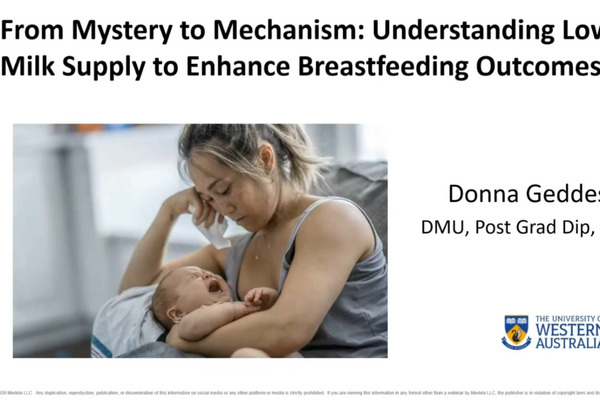
For answers to those questions, people kept telling me, you have to talk to Donna Geddes.
It's about supporting the mother rather than telling her to keep trying harder and it's eventually going to happen.
Donna's a professor at the University of Western Australia in Perth. Today she's a world leading breastfeeding researcher. She's been at it for decades. Donna speaks softly. Her manner is comforting.
Her smile starts in her eyes. If I'd known about Donna when I was pregnant, I might very well have flown down to Australia for the birth. Just to have her by my bedside.
I was an ultra sonographer. I loved my job.
Like Megan, she fell into this work by accident. Early in her career, when she was an ultrasound technician, she found an opportunity to apply her skills under a lactation researcher.
And I completed a short research project where I actually scanned breastfeeding women. I looked at their breasts.
She was fascinated that breastfeeding could be made so visual. She could watch milk flow through the ducts, the tubes that carried down from the milk making cells. And so I was totally hooked. Something became apparent to Donna. Not all breasts were made the same.
So when I do ultrasounds, I can see the size of the milk ducts. And if you have big milk ducts, as in big as like five millimeters versus one millimeter, then obviously you store a lot more so you'll express more. And it's the mums that can express a lot. I call them whoppers, the ducts are big, and you might be the mum that has a 0.9 millimeter ducts in your breasts, and you're not gonna express more than a drop.
Finally, I was getting somewhere. Donna's talking here about colostrum, which is a small amount of thick, extra nutritious milk. Mothers produce it before their full milk supply comes in. For the first few days, that's all a tiny newborn stomach needs. It's sticky stuff, not easy for women with small ducts to squeeze out by hand.
But it bears no relation to your ability of how much milk. Absolutely not. We found no relationship between the volume of colostrum and the volume that you make. When I couldn't get out, even a drop of colostrum that first day at the hospital, I thought mistakenly I had a problem. I feared that I'll not make milk like my mom.
And then there's glandular tissue. That's the part of the breast that makes the milk. Some women have a lot and others not much. And these milk making cells may be less efficient, even if they have many of them. All that means that milk production can vary a lot between women.
When I was struggling, I remember watching videos online of women breast feeding. It wasn't reassuring. Social media is full of success stories of happy moms with their little champion suckers. I thought something was wrong with me. But here, for the first time, I was learning from Donna that some women are just built differently than others.
I mean, of course they are. Right? And just to remind you, I'm a health correspondent. It's my job to know these things. And I can assure you I was really looking for the information I was now getting from Donna.
The fact that I couldn't find it astonishes me. Hearing, or I did, when I was kind of looking into my own problems. I came across the statistics that, you know, on it's very rare. Only five percent of moms cannot make milk for their babies. Yet just by looking around at friends, it seemed to be, like, far more common than that.
What's going on there?
This five percent of women that can't make enough milk was an observation by a clinician back in the early eighties. And there was no evidence for this, no measurements, nothing like that.
Not only was that figure faulty in the first place, it was also outdated. I could feel the rage that followed me during those early days of struggling to feed my baby come flooding back. Since the eighties, obesity and overweight has increased from somewhere like five to ten percent of the population up to forty or fifty percent. And with that comes decreases in maternal health. So we see increased rates of gestational diabetes, more pregnancy complications like hypertension.
We also have women with higher rates of polycystic ovarian syndrome, which is associated with obesity and insulin resistance.
This five percent number is a commonly cited statistic. But studies by Donna and others show that's only for women who are in perfect health, had no trouble conceiving or problems during pregnancy or delivery. When you look at all women, says Donna, the rate is more like fifteen to twenty percent. And it can be much higher for women with certain complications in pregnancy. We can see almost one in two women with gestational diabetes struggling to make enough milk in varying degrees.
One in two. I'm sure that's far more common than those women were led to believe. What makes Donna's work really interesting is that she believes the milk supply problem can be anticipated and managed starting in pregnancy. She's developed a risk screening tool. It's a checklist like ones doctors use to assess someone's risk for heart disease or cancer.
For those deemed to be at risk of low milk production, health professionals could intervene at the regular appointments pregnant women already attend. So at each touch point and with further screening later in pregnancy, we could talk about what breastfeeding might look like for them. What it would look like if things weren't going well. What to do if things weren't going well. To come back really early, like within the first week to get help.
And if the baby is sleepy, we set them up with a breast pump early. We teach them how to use it because you don't wanna try and put that thing together in the middle of the night if your milk I is know, And if your baby's screaming.
Panicking. Right. And then there's this manual of 55 pages. Exactly. This is exactly the kind of help I could have done with.
Instead, all I got from the hospital system was a bunch of mixed messages and a bottle of formula.
We're finding a disturbing trend. Some of the data coming out from around the world and even here in Perth, we're finding that it can be up to thirty to even fifty percent of babies getting a bottle of formula before they leave hospital. But generally, we wouldn't use it in the first three days as that milk production is coming in.
I came to realize that getting formula in the hospital was probably where things went wrong for me. Cutting down on breastfeeding can dry up a woman's normal, healthy milk supply in a matter of days. It's also inappropriate for a new baby. All they need is the tiny amount of colostrum. But this is the sort of knowledge which is lost when breastfeeding isn't taken seriously as a science.
Until recently, there was no medical specialty for breastfeeding in North America. Every other important organ has a medical field cardiology for the heart, hepatology for the liver, nephrology for the kidneys, but no lactology for the mammary gland. This is how the problem gets outsourced to people like the lactation consultants I spoke to. Lactation consultants are great, but they are not part of the formal medical system. You have to go looking for them.
Lactation consultants are still educated, by their own society and, other lactation consultants, not within the nursing system or the education system. So I think this is just a reflection of the lack of research, the lack of evidence, and the loss of knowledge for particularly the midwives. I think it's time we need to bring this whole field into the medical realm.
Yeah. That's that's the one thing I concluded that was really missing, that it's supposed to be all natural and easy. And it's not. It's the human body. And some part of it is not working, or it's working differently in different people, why is there not no medical specialty?
Exactly. And no organ works 100100% of the time. Turns out lots of things can go wrong with the cells that make breast milk. Scientists are just starting to untangle the biology of that. Feeding the baby more often or pumping 12 times a day cannot solve those problems, And these women need to combine breastfeeding with formula.
And the 12 times a day advice on pumping that they got, like thousands of women who call the breastfeeding helplines, it's just an assumption based on how often babies feed. More pseudoscience filling the space where real science has been so desperately lacking. Right now, women who struggle but want to breastfeed are told it's going to happen if they put in enough effort. For many, it pays off. Their milk supply goes up, the baby learns how to feed on the breast.
But those who have a biological reason for low milk supply are gaslighted. They are made to feel they failed because they didn't get up to pump at 4AM every night. In fact, science and medicine have failed them. Researchers like Megan and Donna think some of these problems could be fixable with medications or vitamins that are safe for the baby. But lots more research is needed.
Let's travel into the future. Let's travel, you know, twenty years from now. Lots of science has been done. What would the pathway look like from the moment the woman becomes pregnant or or maybe even before? Like, what would she what sort of help will she get?
What sort of how is her journey going to look like? Wow. So
currently, we do nothing in pregnancy so if I could have the dream, adventure the minute she walked into the obstetrician's office or the clinic or wherever she was giving birth there would be a conversation about the pregnancy and also about breastfeeding and about her breasts. So along with her pregnancy blood tests there are markers for breast development that would reassure us that things are going okay in the mammary gland too so by the time that the baby was born we'd have a really good idea if she would fall into that 50% or two and five whatever that is that's likely to have low production so then she's all set ready to go she knows what the signals are she can almost become independent with just calling in if she has any issues rather than having to bring the baby in. So it's just permeated along that whole journey.
Diagnostic tests may be on the horizon. Donna and others have found molecules in breast milk that are signals for impaired milk production. They could become tests to diagnose this problem directly. In the meantime, as a society, we need to stop telling women what their bodies should or shouldn't be capable of. Having an infant is stressful enough without being made to feel like a failure.
There shouldn't be any regret. I do think we should need
to change the narrative from exclusive to fully breastfeeding or breastfeeding just at your capacity.
And then she'll have far more time to enjoy her baby.
Exactly she's going to be counting the toes and reading books while she's feeding and once we get through that first two or three weeks then she's working at her best.
I never did manage to pump eight times a day. I got to about five on a good day. But the amounts did gradually increase. And after six weeks I decided to take the plunge. I packed away the pump and all the stress that came with it and switched to breastfeeding my baby.
It was still impossible to tell when she stopped feeding and drifted off. But my daughter seemed happy and crucially she grew and grew. Big, fatty cheeks and all. Finally, I could leave the house whenever I wanted with my daughter in her carrier. We could enjoy the beautiful spring.
When I went back to work, my daughter loved breastfeeding so much that there was a new struggle. How would I ever win her off?
Thank you so much for listening to this episode of The Weekend Intelligence. After I heard it, I wanted to share it with a friend immediately before it was even published. So if, like me, you know someone you think would enjoy listening or benefit from listening, you can share it with them even if they aren't an Economist subscriber. Go to the episode page on our website or app, click the share button, and select give us a gift. Today's show was reported by Slovaya Chankova and produced by Sam Colbert.
Nico Rofas did the sound design, and it was fact checked by Rosemary Ward. The executive producer was Sarah Stollartz. The editor of The Weekend Intelligence is Gemma Newby. We'll all see you back here on Monday.
No claim selected
Click an underlined phrase in the transcript to see the fact-check here.