
Money Talks - Londons back, baby
79 claims analyzed
Transcript(79 claims)
The Economist.

Ten years ago, Britain voted to leave the European Union. The British people have spoken, the answer is we're out. At the time, there were widespread fears that Brexit would sully London's financial glory.
The city has a lot to lose. It exports financial services worth more than €25,000,000,000 to the EU every year. The word Brexit alone seems enough to cause alarm with everyone in the city.
But now, after surviving Brexit and recovering from 2008, might London finally be turning a corner?
London's skyline could be about to change forever thanks to a new super tall skyscraper.
London is closing in on New York and pulling away from its European rivals in an index of the world's top financial centers.
Wall Street sized paydays may soon be coming to the city of London.
So today, we head to London and find out how the square mile got its mojo back. You're listening to money talks from the economist, our weekly podcast on the markets, the economy, and the world of business. In New York, I'm Mike Bird.

In Washington DC, I'm Alice Forward.

In Singapore, I'm Ethan Wu.
And in today's show, why things are looking up for the city of London. Alice, Ethan, hey.
Hi. Hey, Mike. I feel like we've started off this episode with some false advertising, seeing that none of us are in London, precisely zero.
None of us are in London.
Metaphorically, we're always at least a little bit in London, I guess.
Yes. Even more metaphorically today in this episode.
I guess at least the two of you are in proper rival financial centers to London. DC, not scoring at the top of that pecking order, but apparently roughly in line with Paris.
That is really like mud in the eye for Paris. Is bad news for them. Sorry.
Well, at least the two of you actually got your starts in London. I have never once in my life worked in London.
Oh my god. It was fifteen years ago now. I started on the graduate scheme at a big investment bank in London. And it's quite time getting up at 5AM, having stayed out until like 3AM with all the other grads.
How much like the opening season of industry is it? HBO's Industry for those who haven't seen it.
I would say it was like very accurately depicted except no one was having that much sex.
That's the
like TLDR of that show. They're all naked all the time. So that's just not what it was like.
I was also in the city, but I was a junior reporter at City AM. Financial free sheets in London, for those of you not aware, where the earnings schedule was slightly lower than the FX trading desk.
Well, I for one, as someone with no London expertise, am very glad to have both of you for this episode. Mike, when you think back to 2016, I mean, was watching Brexit from The US, but what was the mood in the city of London at that time?
Yeah. I was writing about finance in the run up to the referendum. I think it was a lot of confidence that The UK would remain within the EU and a huge nasty negative shock immediately afterwards. Huge amount of worry about being outside of the single market. So you have this huge sell off in the pound immediately afterwards, which I think was really the barometer of how people were feeling about it.
And there were all of these predictions about the many hundreds of thousands of jobs that were tied to Europe in some way or another that would be lost. It has been a rough run for London. In 2025, London dropped out of the top 20 sites for IPO volumes. That is a really astounding fall from grace. But the industry still accounts for 8% of The UK economy.
It's worth about £224,000,000,000 or $300,000,000,000 or so a year. That is actually 20% more in real terms than immediately after the Brexit referendum when it made up about 7% of The UK economy. So there is actual hard data here. It's not just the city either. You've seen the flourishing of King's Cross across town from the city itself and, you know, mostly known as a starting off point for train journeys to Hogwarts School of Witchcraft and Wizardry internationally, is now something of a sort of AI hub.
It's really the center of London's AI scene in London has become clearly the main AI related center of investment activity in Europe. There's a certain sense of confidence there, which is interesting because it comes at a time when, know, obviously confidence in The UK economy more broadly, I'd say is very, very low.
Could I just ask you, the naysayers were probably overdoing it and now London feels good again. But there was like a dip in recovery, right? It's not just that people who said that there was gonna be a downswing in London and the city after Brexit. They weren't just wrong, right?
No. No. Absolutely. And the reality, The UK did leave the single market. That did actually happen.
I think there were several things going on. One is that while a lot of European cities made a very, very big noise about taking jobs from London post Brexit. None of them have really popped out as an obvious alternative financial center. Now that's partly because of history, because of size. London is an enormous city.
It's always had a very large financial center. It's the natural home for lots of things that aren't really related to the European Union. It's the dominant hub for FX trading, for example. So it has these strong network effects that are quite hard to break even though the sort of regulator and economic environment has probably dimmed a little bit through exit from the EU. It has the time zone.
This always sounded to me when I lived in London, when people talk about the advantageous time zone, to be a bit of a weak example. It's only living outside of London that you realize, no, that is absolutely true. The idea of being able to have a conversation with someone who works in both Hong Kong or Singapore and New York or even San Francisco within the same calendar day, within reasonable working hours, is something that you can only do from pretty small parts of Western Europe. You know, there's not many other places where you'd likely set up a trading floor and be able to do that.
Just to reiterate this, the like trading books for markets that trade twenty four hours like foreign exchange. You basically you need to have a book running from Western Europe because the books get handed from Singapore to London at the end of Singapore's day and then handed over to New York. And there's basically like no other way to do it. You need someone in this time zone.
And I mean, speaking of the FX market, even the much beaten up on pound, as you referenced, Mike, has come up off the lows of the past few years and remains stronger than it was after the depths of the Brexit sell off. Are there other data points you'd look at to show how London has perhaps come back a little bit in recent years?
Yes. There are. It is difficult sometimes to quantify what I'm essentially saying is a vibe shift. But Zyen, which is a City Of London based think tank, makes an effort to rank financial centers, competitiveness. They do this with some hard data and a lot of survey data people in the financial industry.
So London and New York used to compete for the top spot in that index. In 2020, London had fallen to a distant second place, quite a long way behind New York. In the latest survey, it is really, really just behind New York again. It garners 766 points on CN's index relative to New York's 767. It is literally one point behind.
So there's quantitative factors in there, actual hard data, but it's the responses to the survey that are also driving this. Apparently, the boss of one big American asset manager said that half of my staff want to move to London. I wanted to get a better sense of the vibe shift and what's actually happening. So I spoke to professor Michael Minelli. He's the chairman of CN.
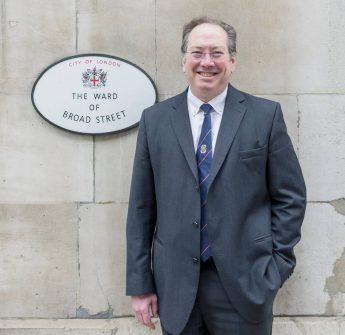
And in twenty twenty three, twenty four, he was the six hundred and ninety fifth lord mayor of the city of London, the first American to ever hold that position, which may be a bit of a sign of the city changing underneath. He is also the dad of one of our staff at The Economist who is not involved in the construction of this episode.
And just for our global listeners who might be unfamiliar with Britain's many arcane roles, the Lord Mayor of the City Of London is not the same as the Mayor of London, which is Sadiq Khan. The Lord Mayor acts more as a global ambassador for British financial assets approaching the city, the square mile to international markets. He is not in charge of London's policy.
Yes. That is an important clarification. The Lord Mayor of London comes with a great outfit. Sadly, Michael is not doing the job anymore, so he wasn't wearing that outfit when I spoke to him the other day. But, yeah, let's listen to the interview.
Michael, welcome to the show. Delighted to
be here, Mike. A real privilege. So one of
the things that CN puts out is a ranking of global financial centers. And in the rankings, it's incredibly tight up at the top. The index has New York and London a point apart in first and second place, Hong Kong and Singapore behind. Tell me a little bit about London after Brexit. I think there would be a widespread perception that London would suffer significantly as a financial center after The UK left the EU.
Tell us sort of broad strokes last ten years. What has actually happened there?
The Global Financial Centers Index, which we call GFCI, it's actually on a 1,000 scale. So your remark about a single point difference is very, very important. Post Brexit, well, it's been an intriguing thing. Let me knock out some facts. You're looking at a city that hosts 40% of global foreign exchange trading every single day.
You're looking at a city that is home to almost all of the major international shipping business. We have 200 brokers and 100 underwriters writing tremendous amounts of business through the London markets and Lloyd's. We have P and I shipping mutuals, 95% of protection and indemnity insurance goes through 12 companies most people have never heard of. We have interdealer brokers. We have this.
We have that. And on and on you go. We are a wholesale financial center. And lastly, the metric that most people point to is the stock exchange. Now the stock exchange is very important and a treasured institution and many other things, but it is not the indicator of all those other sectors that I just mentioned.
So the city as a whole is very healthy. At the time of Brexit, we had 525,000 people working in the city of London. We now have 676,000 people working in the city of London. That's an enormous increase, and it's a sign that over the last ten years, the city has done well. We could have a different discussion about the wider UK economy perhaps, but the city is doing fine post Brexit.
I wanted to ask about a specific industry as well, partly because our editor, Dan, is a former insurance journalist, and he's got a gun to my head to make me ask a question. London is extremely strong on insurance. It seems to have been indeed growing the share of global insurance business done through the city. Why is London particularly strong in this area?
London's got several elements to it. Insurance is inherently a long term product. So what you might call easy within year type insurance risk can be written domestically and locally. But as you move up, you want somebody with a really good long track record and Lloyd's having been founded in the seventeenth century has that track record and the confidence of paying out. Sure, it's had its problems, but Lloyd's pays out, London pays out, and that's what you wanna know when you take insurance.
Second thing is there are a variety of specialist risk providers here and many of these risks interact with each other. The risk skills, the risk analytical skills that are here are absolutely crucial for trying to have a guess at how much would I pay that out? How often would I pay that out? What would the price be? And I believe that the London markets are crucial.
They employ about 45,000 to 50,000 of the people I spoke about. They're responsible for probably about 15% of the city's turnover in finance. It's a very, very important sector and one that shows both tradition and innovation working well together.
One of the biggest recent optimism stories about London in general has been its clear emergence as the leading European center, one of the leading global centers really for AI and AI talent. Is there a finance aspect to this? And I say this tentatively, but is this a London story more generally than a city story particularly? You know, King's Cross increasingly feels like not so much a competitor to the city because it's different kind of roles, but it's a new center of talent. It's a new hub.
It always feels very buzzy when I'm there, when I'm back in London. What do you make of that?
Well, to me, the four ways in which London competes, and frankly, any global financial center competes, is defense and security. Remember, nobody brings their money to a war zone or a cybersecurity hazard. Secondly, you're looking at rule of law, and our rule of law is very, very strong. The third thing you're after is open and competitive trade. You don't wanna walk into a monopoly market or things like that.
And the final thing is access to talent and skills. And so, yes, it's hardly the case that people have to live in the city and work in the city. Heck, that'd be kind of impossible. We only have 8,000 residents in the city. So it is a London wide AI issue.
But I would point out, and this is not at all to say that King's Cross or anything else is there, but one of the points I do make about London itself, Central London, within two miles of the Guildhall, we have 40 learned societies, 70 universities, and 130 research institutes. So that includes the Crick and the Kings Cross area. So the intense concentration is London, but it is also the city.
Michael Manelli, it's been a pleasure. Thank you very much for making the time to talk to us.
Thank you, Mike. And I hope that Dan pushes you even harder on insurance.
So I really enjoyed that chat with Michael Minelli. I do actually like the insurance stuff as much as I mock Dan for it. And I think that's probably a good example of something where you really need or benefit from a particularly large network in a particular industry. Right? If you want a very precise, potentially individually designed insurance contract, having a very large insurance industry that matters, and that means all sorts of capital following behind.
It means all sorts of legal work following behind. I think also over time, I've come to realize just how difficult it is staffing up a large institution if you're trying to move it. It seems like something when you're writing as a financial journalist, you know, oh, hire a thousand people here, hire a thousand people there. It's actually not as easy as it sounds to pay people to do work. You often can't find the right people in the right place, and that's another way.
The network effects matter. I spent a lot of my time thinking about this when I'd first moved to Singapore from Hong Kong, when you had this conversation about Singapore as a financial center and what it would take from Hong Kong. And the conversation often revolved around actually, you know, there just aren't 1,500, 2,000 people. These aren't the highest numbers in the world, but doing this specific bit of work that's done in Hong Kong and they don't all wanna move over and so it was very, very difficult to staff things up, much more difficult than you might expect.
Yeah. That is a good point. I guess after your conversation with Michael, I feel pretty convinced that the turnaround story is true. As Michael pointed out, like London is still extremely important global financial center. It's still the sort of hub of activity for things like foreign exchange, insurance and lots of other activity.
It does seem pretty clear from the Zyen Index that there has been a turnaround. The thing that I am struggling a bit with is understanding why this is going on. If you look at the Zyen Index, it very clearly peaked in 2016. Fell pretty sharply for six years after that, and then it has turned around since 2022. And a lot of the things we're talking about like, oh, London has these deep insurance networks.
It is useful for foreign exchange, the time zone, etc, etc. Very hard to explain an inflection point using those long term factors. If you think about what was going on in Britain in 2022, there's a lot else going on. It was the year the Queen died. Liz Truss was Prime Minister very briefly.
The pound went through the floor. Interest rates shot up. I'm curious to see whether we'll be able to sort of tease out precisely why this turnaround has happened.
I don't think it was the Queen's death that brought it back, to be clear. Ethan, what do you think?
If I had to guess, I wonder if it's old strengths reasserting themselves as people get used to the new post Brexit equilibrium. But that's really just a guess. I mean, I wanted to propose an example from the other end of the spectrum, a city that can't become a financial hub. And I'm talking about Seoul, which I was in a couple months ago. I mean, it does have some finances as major cities do, but it pales comparison even to Tokyo within Asia and certainly to Hong Kong and Singapore.
I was speaking with a gentleman at one of the big international banks when I was there and I asked him, why can't Korea be more of a hub? There's a lot of companies here. There's like some amount of domestic market. It's a rich country. It's growing relatively quickly for the development stage.
And his answer was, well, the network effects aren't there and we don't have English common law. And without those two things, it's extremely hard to set up a financial center, no matter how hard the government tries. And I mean, he in comparing Korea to Hong Kong and Singapore connected it back to colonial era, that Hong Kong and Singapore had these through lines with Britain. So in a way, even those two hubs are sort of extensions of London, at least in historical terms. And I think that's really just to say that being a financial hub is a very sticky thing and it can survive a lot of even like self inflicted wounds.
I don't know if that really gets to answering your question, Alice, but if I had to pause it to guess, maybe it's just a it was a great financial center all along and nothing's gonna get in London's way.
Yeah. So some people maybe just like made mistakes after Brexit. They thought that it was gonna be really damaging and it wasn't. You saw this a bit this week with JP Morgan. They moved a load of traders that they moved to Paris back to London after Jamie Dimon got his Legion d'Honneur from Macron for expanding Paris as a financial hub.
So yeah, one false wall hypothesis is just that the people thought that it was gonna be damaging and it wasn't, and now everyone's realigning. But, yeah, I guess we'll keep unpacking.
One thing we have to say as well is like we don't have a counterfactual here. For all we know, like, the city would be much, much stronger had things remained on track, had The UK not left the EU. We don't have numbers for that. People really did hold off employing people in London. That was a real phenomenon.
You know, if you were expanding your European presence in twenty seventeen, eighteen, nineteen, twenty even, you were not thinking about doing that in The UK. So it's totally reasonable to say, you know, there was significant loss here. I wanted to start to think a little bit about not just what's gone well for London, but what's coming in the future as well. So to find out a little bit more about that, I spoke with Hugh Van Sennis. In a previous life, he was an analyst to the financial sector at Morgan Stanley and a few other places.
He is now a vice chair and partner at Oliver Wyman.

Hugh, welcome to the show. Thanks so much.
So you're often in different financial centers around the world. Where do you think London stands in the sort of pecking order, strengths and weaknesses? What's your broad sense of this?
Well, New York remains top of the apex as just the financial center of the world. But I do think that in the last couple of years, London's gone its bars back. You can see that by the number of acquisitions by North American firms of UK ones, whether that's Nuveen taking over Schroders, Apollo taking over PIC, or Brookfield taking over the Just Group. International Capital is looking to find a home. And I think also the governments really understand now that without International Capital, you can't finance an economy.
So I think there's just that little bit more buzz. Also, it's not just major banks, it's fintech. Revolut's just got their banking license. There's a real spring in the step in finance.
What about London's role as a financer of different parts of Europe? What's happening there, and what was the overall effect of Brexit?
Brexit did have a chilling effect on jobs for a while. A number of jobs clearly did move across the continent, and appropriately so because cross border business became more difficult. I think the other thing I noticed were there were fewer global heads based in London. I think that was the real thing. And there was a moment before the financial crisis where you could be in London or New York and be the global head of a business.
That drifted away. So I do think it had a really profound impact. But I think the issue here is now ten years on is rail politic. We need to finance the economies. The Bank of England was given a secondary growth mandate three years ago, which means as they start to think about the rules going forward, they need to think, does it enhance the competitiveness of the economy, and does it help growth?
And so I think it's actually easing up some of the regulations to help credit flow. As we look ahead in Europe, we need to finance data centers, energy infrastructure, defense, industrialization, trillions of assets. And quite frankly, you need international money. I mean, I've just been meeting today with the CEO of one of the major Canadian pension funds. They have more UK assets than pretty much any UK pension fund I know of.
And I think that you need that mobile capital to fund the dreams and aspirations that we have in The UK. And so I think that's why the city, which was really as much a cross border concept as domestic one, is much more relevant again.
That's a real London versus New York distinction. Right? In that New York is a massive financial center in large part because The US is an enormous economy, and it is the financial center for that. That was never really London's role. The financial role of London grew up as an imperial project, really.
It wasn't just about financing things in The UK, and I suppose it's always been like that to some extent.
Yeah. So some of that is obviously insurance, and, obviously, the Lloyds market remains very relevant globally. Some of that was currencies, and, actually, The UK remains a very important place for currency trading. And, obviously, since we've had interest rates go back up and all the volatility in the world, there's lots more macro trading being done. So that's relevant.
I think, though, one of the secrets of the Citi, which I don't think is being well lauded, is actually how many world class investors, both in public and private markets there are in The UK. There's a real entrepreneurial spirit amongst public and private markets. Going And back to that point about if we're gonna fund these trillions of investments, we can't just do it through bank capital or the public markets. You know, the private markets will have to take up their share of the slack.
Let's talk about banking specifically a little bit just because even before Brexit, I think this was an area that people worried about a lot, that people thought London was losing its global role in. You did see a lot of UK banks really hammered in the years after the financial crisis sort of struggling to recover there. What is the picture like right now for banking?
I think that the financial crisis led to a real balkanization of banking capital. In other words, the deposits in one market kind of need to stay more or less in that market. And notwithstanding banking union across Europe, that's pretty true of Continental Europe too. There was a very painful deleveraging post the financial crisis, but we've now got assets and liabilities back in match for The UK banks, and so I think we're just in a much better place. Obviously, those years of zero rates were incredibly painful for the banks, and so it's really since 2021, as we've now gone back to a more normal interest rate environment, if we can call today normal, that's something which really has also given the banks manner in the desert.
It's been incredibly important to get rates back up again.
Let's talk a little bit too about private markets. The opportunities, the role of London there, it's mostly something, if I'm honest, from my gig that I think are from a US perspective. How is London doing in terms of carving out private markets related business? Is that the sort of thing when we're talking about the financing of Europe more broadly that London's still keeping a big role in?
Oh, so I think that this is now where London is playing a a very big role. So let me start on the private credit side. So I was giving the example of international capital. US insurers own more European securitizations than European insurers do. It's incredibly important to have this cross border capital.
And, of course, securitization is often the way that we finance infrastructure, whether it be digital or energy or what have you. So private markets are incredibly important. Private equities has leapfrogged from London, but, obviously, everyone's got offices around the continent because to originate deals, you also have to have a local local presence. So I wouldn't wanna say this is just London. I think this is a pan European story, but London remains the headquarters of choice.
The view of the economic policy of the last several British governments is not a particularly rosy one in retrospect. The UK economy has not grown particularly well. And I think generally, people have gotten the sense that things have been mismanaged. In the financial sector specifically, when we're thinking about regulation, growth oriented policies, has there been anything of meaningful importance in recent years that has run-in the other direction that's actually been a positive trend? I'm trying to understand whether this is a complete benign neglect story where London's positive attributes simply allow it to have a better role in the world, or whether there's some actual active force making this happen?
So I think there's a couple of things. I mean, I think, first, finance likes to respond to the world as it is rather than we'd like it to be. And therefore, look. Economies need to be financed. Governments need to be financed.
Entrepreneurs need to set up their businesses. So there's always an open door in terms of financiers being entrepreneurial and looking for opportunities to put money to work. It is more helpful when you've got a good policy backdrop. And I think that some of the deregulation and recalibration going through in The States It's putting that little bit more pressure on The UK and Europe to reconsider whether it's got the right balance. And in particular, I think that we're finding the Bank of England is really starting to recalibrate rules, starting to think through bottoms up, were the rules from the financial crisis correctly set or and whether they need to be sort of tweaked a bit.
But I think it goes back to this thing that post the pandemic, the debt stacks of The UK and most European countries are so high that it's more difficult for them to put money to work. And therefore, to finance the infrastructure, digital, energy, defense, what have you, you need private sector investing. And so I think that reality post the pandemic is as much the catalyst as it is the changes before.
Now in terms of optimism, this is an intangible question, but you travel to these places. You travel between London and New York all the time. What do you make of the sort of general mojo of the financial centers? Do you think London has a spring in its step?
Oh, I think London definitely has a spring in its step in parts. I mean, give you one example. If you sit around Lexington Avenue or Times Square, you just see branded gilets of all the finance folk wandering around. You've started to see that in London over the last eighteen months. And in a way, when people would be embarrassed to say they were in finance at a party, now they're very much branded.
And so I think the Gillet coming to London is probably a real sense of that there is a little bit more pride and there's a little bit more confidence in the institutions here. Wonderful.
We'll have to think about getting economist ones. Hugh Van Sindis, thank you very much for making the time to talk to us.
Thank you, Mike. Having you back.
Alice, Ethan, it was a pleasure to talk to Hugh. What did you guys make of that?
I mean, my first thought is that we need to find some formal way to measure the Gillet index because what a data series that would be. And I believe it. You know you would have called me dead in UBS merch in 2012. I mean, I don't know. I'd be like thirsty to wear it now, but maybe not as afraid.
Yeah, I mean, he was always super insightful. There are a few things there that he said that I want to pick up on. I guess just to stick with the framework that I was talking about in sort of the middle of the show, like why has there been this inflection point in the city's fortunes of this initial come down post Brexit? One argument is just that the remainders were kind of wrong, that like the City of London strengths would reassert themselves, the losses wouldn't be that bad and the City of London would sort of chug along just fine. Clearly sort of partial truth to that in that I don't think the damage was anywhere near as bad as people forecast, but they were definitely right that it obviously wasn't good news.
I guess there's sort of another angle you could take is that maybe the Brexiteers had a point. There was a bit of a come down for City of London in the aftermath of Brexit, but one of the things that happened in 2022 is that Rishi put together a big deregulation of the financial industry bill. There's been some rewriting of insurance industry regulation in particular since then. So maybe this idea that like, yes, leaving the EU might not be great, but you'll be able to sort of ditch all their silly rules and that will allow the financial industry to flourish. Maybe there's an element of truth to that.
But I do also think that the other big thing that you mentioned that happened in 2022 was that interest rates went back up and that helps all financial centres. If you have a bigger financial centre, maybe it helps you a bit more. But London specifically or Britain specifically had this combination of interest rates going back up, which helps all of the financial companies and the exchange rate going through the floor. And that in some ways makes London more appealing from just a cost base perspective for everyone. The chap who said half his staff wants to move to London, my immediate reaction was, well, at what wages?
I presume they all want to move at their New York wages. No one's saying like, I want my salary to be indexed to British growth, British productivity, British wage levels. And I presume if they were, no one's moving, right? And so I think there's this interesting story within this story, which is that the city is doing fine because it's indexed to various global things and maybe is appealing for some of the good news out of Brexit potentially, but also for this bad news story out of Brexit, which is that the economy is doing terribly and therefore London is a potentially cheaper place for fleet footed international financiers to live. So yeah, there's vaguely optimistic and pessimistic things encapsulating that answer.
This is definitely an important thing. Right? The wages point was one I was going to, like, cynically make in that you hear this about a bunch of industries. Like, The UK film industry has done very well, and it's pulled loads of jobs. And there is a real achievement that American film related companies complain about this.
People can't get as much work, but it's also just like, it's a lot more expensive to hire someone in The US. So, yeah, there is a, I think, a cynical side of it as well.
I guess a lingering question I have is like the point at which weaknesses in an economy undermine the financial center itself. How independent are those really? Right? So I mean, housing costs is something we talk about a lot in the context of weaknesses in The UK that need to build more housing, get rid of bottlenecks, so on and so forth. But you look across financial centers in the world, whether that's Hong Kong, whether that's New York, whether that's London, they all have extremely high housing costs.
The conventional narrative around expensive housing dissuades talent from moving into your city and then undermines its competitiveness. I guess the question again is compared to what exactly? You're still getting fresh grads that are willing to move there and live with the roommates and make it work for themselves. And it just seems to me that there's a little bit of insulation because we are talking about a sector story, not an economy wide story when we talk about a financial hub. It doesn't necessarily reflect on the entire health of the economy.
Now maybe New York is an exception there given the degree to which that financial center is tied to domestic conditions of The States. But at least for London, given how much it's a crossroads for international business, maybe the health of UK economy is not the most important variable for London's success at least.
There are a couple more things that Hugh was talking about that I wanted to dig into. And for one, I hate the shoelace, and I'm sad that they're turning up in London. It's not that I hate the the show of confidence. I hate them aesthetically. I think they look absolutely awful.
More importantly, it has now been very nearly eighteen years since Lehman Brothers went bankrupt. And you are going to have a generation of summer interns at investment banks soon that were born after the financial crisis. You already have young bankers who do not remember this happening at all. Right? But that's finance coming back.
There was something a Singaporean regulator said to me after I moved to Singapore, and we were talking about this issue of which cities would do well, what could Singapore take from Hong Kong. One thing the Singaporean financial industry and the government really didn't try to do and pressed to financial journalists very hard that they weren't trying to do was they didn't care that much about equity capital markets and a lot of banking activity. They basically said Hong Kong is good at this, and we'll compete with Hong Kong on wealth management and all sorts of international legal stuff and all sorts of smaller areas of finance, but they can keep the equity capital raising. And that's how it's played out. Hong Kong's still doing really well on equity capital raising, and Singapore is still a bit pretty much a sort of nothing in that area.
And the other thing that he said when I spoke to him was that basically, if a city had to really big up the fact that it was gonna steal loads of jobs from another financial center, then it probably wasn't going to do it. Basically, the the cities that are actually going to do it don't need to make a big deal out of it, which I think does reflect what has happened with a lot of European cities that made a very big noise about this after the Brexit vote, and things didn't really play out quite that way. Paris. Yeah. Yeah.
Certain French capital cities might have made a big deal. I won't name any names. I actually think weirdly, The UK could do with taking a more Singaporean attitude towards these things, which is that in some ways, London as a full bore financial center has suffered, whether that's because of the financial crisis or Brexit or other factors. IPOs, for example, terrible run of IPO volumes. It's declined in absolute terms.
It's declined even as a proportion of the European total, which in itself is declining as a proportion of the global total. If you were just looking at listings, London has done absolutely terribly. If you were looking at first tier in the world financial firms, The UK's investment banking presence in the world is not what it once was. It's been depressed in terms of household names on that front. I think in a country like Singapore, the government and the regulators and the financial industry don't care.
They don't care if it's gonna be, you know, American banks setting up foreign financial institutions setting up for them. It's about having a talent base. You're gonna come here. You're gonna hire Singaporeans. It doesn't matter that DBS isn't a first tier financial institution out there in the world.
That's fine. Who cares? Right? And I think London benefits from having a bit more of that attitude. I think actually in reality, that's slightly closer to how things have turned out.
Well, Mike, if The UK is going to take a more Singaporean approach, then at least in the wealth management sector, it's got a little catching up to do. Singapore in the latest rankings from Boston Consulting Group is the third biggest and also growing the fastest, whereas The UK is only the fifth biggest and growing at about half the rate. So, you know, a ways to go.
There you go. Room for improvement in many different areas. I think that is about all we have time for, except of course, for our stats of the week. Okay. Alice first, what have you got for us?
My start of the week this week is $2,000,000,000, which is the amount of money that Better, formerly known as Facebook, wants to pay for Manus, which is an AI startup that was founded in China, but relocated their HQ and all of their staff to to Singapore in 2025. When the deal was announced in December, it wasn't entirely clear whether Beijing would try to exert its authority or block a merger that was going to take place technically beyond its borders, but it has now done it. It has said that it barred Meta from buying Manus. And yeah, it's very reminiscent of all of the Chinese interventions, things like Didi trying to list in The US getting killed or the Ant Group financial listing that also got scuppered. It seems like the mood in Beijing has not changed when it comes to local tech companies.
They're still gonna boss them around.
Slightly ruining the attempt to redomicile as a Singaporean company, isn't it? When the Chinese regulators tell you can't be purchased. It's like, you're ruining the visual effect of this as a we're a Singaporean company, guys. Don't worry about us.
The wild thing is they're kind of doing a little bit of a take backseat here. I mean, the Chinese regulators approved this transfer once upon a time.
Also, they have to actually unwind it. All of these employees have actually already joined Meta. All of the capital has been transferred. Yeah, it's like they're forcing them to unpick the deal, which is pretty breathtaking.
That's quite a big one.
Well, my stat this week is 1% and this is the proposed consumption tax rate that the ruling party is discussing in Japan. And it's 1% because the current prime minister campaigned on a 0% consumption tax rate temporarily as an inflation offset. But as legislators have gotten to discussing how they're going to do the 0% thing, they've realized, oh, the cash registers in Japan don't know what zero percent is because they've all been programmed to have some kind of tax rate implemented. So now the rate under discussion is 1%, which will be drastically easier to implement across the Japanese economy than 0%.
That is very funny.
These feel like they shouldn't be 2026 problems.
Okay. My stat of the week. I got two stats. 20.779.9%. These are the rates of passport possession by state in The United States.
Specifically, are the states with the least and most passports as a percentage of the population. I've been thinking about this because of our discussion last week about green cards. Donald Trump is going to be on some new commemorative US passports. I would love you guys to guess which states are top and which states are bottom.
Oh, man. I feel like the bottom has to be some kind of, like, inner American state that doesn't border one of the neighbors.
It's Nebraska.
Yeah. Or, like, Oklahoma.
And then the top state, I bet it's gonna be a weird one, like Hawaii or something where they like all have to be able to travel. Those are my guesses.
I was gonna guess New Mexico is the highest.
So I can't remember who said Oklahoma. Oklahoma's low down the list, but it's not at the bottom. Oklahoma's 33.1% estimated. West Virginia is the bottom at 20.7%. I think that is partly an income level thing, not just a better places to visit thing.
It is not a wealthy state. And at the top of the rankings, beating Connecticut, New York, Massachusetts, California is New Jersey. Oh. One could make a joke about wanting to get out of New Jersey. I won't do it because I think it's actually a very underrated state.
I think it's the most American state in my view. I like New Jersey.
I gotta back up. Mike, you're underrated global financial hub in New Jersey.
Yeah. I agree. Underrated in lots and lots of ways. These snobby New Yorkers have done it down, I think, in the international mind. It's a great place.
Okay. Alright. That's all we got time for. We're not slandering any more locations this week. Tune in next week, and we'll all pick some more.
All that is left to do is to give a big thank you to professor Michael Minelli and Hugh Van Steenes for speaking to us.
And thank you for listening to Money Talks. If you know someone who might enjoy this podcast who's not an Economist subscriber, there is a way to share it with them. Find the episode on The Economist app, click the share button, then select give as a gift.
You can always write to us at podcastseconomist dot com.
Today's show was produced by Tom Wulfanden.
Our sound engineer is Tingly Lim.
Dan Asher is our editor. And the executive producer is Hannah Marino.
I'm Mike Bird. I'm Ethan Wu.
I'm Alice Forward.
And this is The Economist.
No claim selected
Click an underlined phrase in the transcript to see the fact-check here.