
Top dog-whistler - Tommy Robinson and Britain’s far right
57 claims analyzed
Transcript(57 claims)
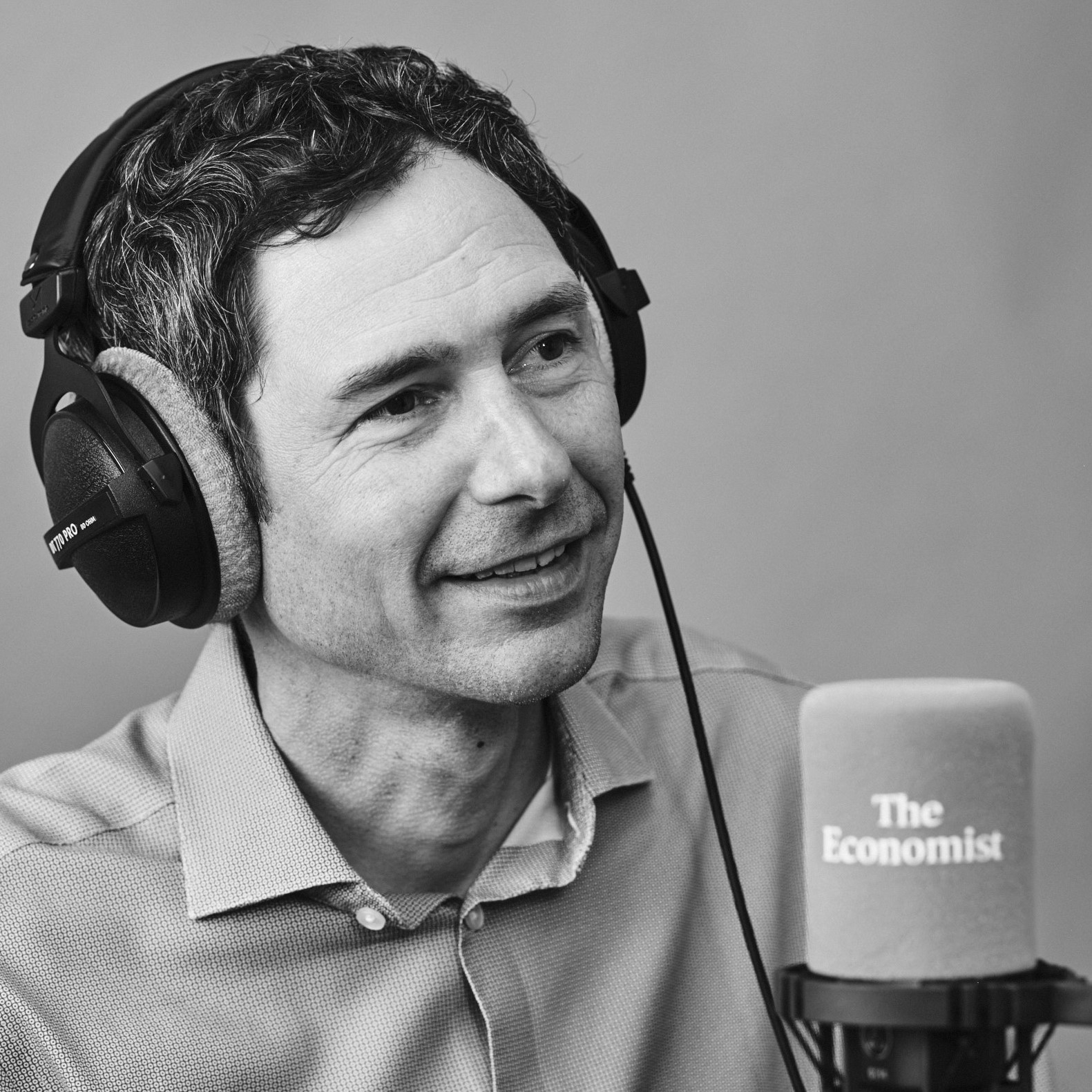
The Economist. Hello, and welcome to The Intelligence from The Economist. I'm Jason Palmer.

And I'm Rosie Bloor.
Today on the show, an uplifting merger in the elevator industry and a tribute to Rahu Rai, India's most famous photojournalist. First up though.

Stream is live. Let's go.

It's really been quite the year for Steven Yaxley Lennon, the far right activist better known to many as Tommy Robinson. Robinson.
George Obanjo is a Britain correspondent for The Economist.
Live streaming from his car in San Diego, he described the previous twelve months.
I was on solid confinement this time last year. Yeah? I've come out. We've had a million on the streets. I'm here meeting highest ranking members of government.
We're spreading our message. We're forming partnerships and friendships.
Robinson had spent time in prison because he'd been found in contempt of court for repeatedly libeling a Syrian schoolboy. And that claim that he brought a million people onto the streets, that was for a rally in London last September. They police say it was a 150,000. During that event, he beamed Elon Musk onto giant screens to give a speech.

The essence of democracy is it should be a government for the people, by the people. And in in fact, this is a government against the people and not for the people. This is why everyone is gathered here today is something's gotta be done. This is unacceptable.
Robinson does have a long criminal record. But despite that, he was still able to enter America where he visited the state department. They had given him a waiver. He spent lots of time with congressmen, and he also did the podcast rounds warning Americans of the dangers of radical Islam, which he says has destroyed Britain.
What are you actually hoping that that will will happen instantly? We have the equivalent of a nice organization who are tracking down, hunting down, and removing criminals and illegal aliens who are in this country illegally, who shouldn't be here.
And on Saturday, he will be back on the streets of London hosting what he's calling the biggest patriotic gathering the country has ever seen.
So, Georgia, first of all, tell me how mister Robinson, mister Yaxley Lenin, is perceived in Britain these days.
Yeah. So we actually looked into this. The Economist commissioned a survey from More Uncommon, and it found that only 14% of Brits support Tommy Robinson. Now he is more popular with British men. A different survey by YouGov, another pollster found that 29% of British men like him, and that's up from 9% in 2021.
So you might be able to see there, Jason, that Robinson has long been a controversial figure. To his critics, he's a bigot. He posts messages on X, Musk's social media platform, implying that Muslims poison dogs in parks. You only need to look at the speakers invited to his rally, such as Valentina Gomez, an American influencer who's most famous or notorious for burning a Quran with a flamethrower. Mainstream politicians shun him, commentators dismiss him as marginal, and he's too toxic even for Nigel Farage, who leads the right wing populist party reform UK.
That said though, he has other forms of influence. On X, he's got 1,900,000 followers, and that's more than almost any other British political figure.
But it's very clear he's very, very popular also in America.
Yeah. So he gets lots of donations from Americans who agree with what he's doing, and powerful people who are invested in his narrative. So for over a decade, Robinson has sold this quite distorted vision of Britain that's recently gone global. It's this cautionary tale of a nation that's been overrun by Islamic invaders or betrayed by a wake liberal elite. And some people who seem invested in that narrative are Steve Bannon, who is Donald Trump's former chief strategist, has called him the backbone of Britain before.
Elon Musk retweets him and has paid his legal fees. He did that last year when Robinson stood trial for what at the time seemed to be quite shaky terror charges. And straight after he was acquitted in that trial, he went on a state sponsored trip to Israel. He's also made trips to Russia and The UAE.
So how is it that he has acquired not just a a following, but a following of such influential people in America?
So I think that Robinson is a case study, really, in how political influence is changing, not just in Britain, but beyond. So if you look at his story, he founded the English Defence League in 2009.
Stand tall. Stand proud. Look around you. Feel your strength.
And that was really a street movement inspired by football hooliganism. It had a slogan, which was that they weren't racist, they weren't violent, they were just no longer silent. But ultimately, it failed when it got infiltrated by neo Nazis. That probably would have been the end for Robinson in almost any other era. But he found a new way to cut through as a journalist or what we might call an influencer.
In 2017, he got a job making videos for Rebel Media, which is a far right Canadian news website, kind of similar to Breitbart in The US. And that was kind of an inspired move because today, two thirds of people globally consume social video for news. The move gave him a profile, it gave him transatlantic connections, and ultimately, it gave him control of his own narrative. So all those legal scrapes he's been involved in could be used as evidence that he was being silenced by the establishment, for example. And I think it's this image of him as a free speech martyr that's really cut through in America, especially with MAGA.
And in Britain, in particular, where the political climate has it that reform a populist right party is very much in the ascendant, that would make him potentially a good political figure.
Yeah. You might think so. And in many ways, he has what politicians would kill for. He has better name recognition than almost any cabinet minister. He can get his supporters onto the streets as this rally on Saturday will show.
But what's so interesting about Robinson is that that influence does not translate to the ballot box. So in 2019, he lost his bid to become a member of European parliament in Britain. You mentioned reform. He's got a positive approval rating with reform vators from 2024, but a negative one with newer vators, and they're the ones that have put the party top of the polls. So in many ways, it's actually quite useful for Nigel Farage to distance himself from Robinson.
It makes him look more mainstream and it's not necessarily what the voters want. There's a few other things as well. So Robinson loves Donald Trump. He is his absolute hero, but Trump is really unpopular in Britain. And as well as that, the new media ecosystem, which skews right wing in America, is fracturing because of the wars in The Middle East.
And you spoke with mister Robinson ahead of this rally on Saturday. Tell me what that was like. What what struck you about the conversation?
Yeah. What struck me was how riled up he was. See, he told me that he thought the British people have had enough. He promised there would be huge numbers on Saturday, though he was skeptical that we, as members of the mainstream media, would tell the truth about them. And what struck me as well was the huge gulf in perception between how the media perceives him and how he sees himself.
So he insisted that he was under pressure from those with more extreme views to go even further in his stances. He did offer me a press pass, so I'm hoping to have the opportunity to see for myself on Saturday, but we will see if he comes through with that.
And so whether you're in the press gaggle or not, what do you expect we'll see at this rally?
So we will see quite a few international faces. Glenn Beck, the American talk radio host, has said he will be there. The government, however, has banned some speakers from appearing at the rally, which is a little bit difficult, I think, given that it is accused of suppressing free speech. But really this event is about British people. Robinson has done a very good job at speaking to many who are very disillusioned with the government and with the media.
Trust in both of those institutions are at or near record lows. And he speaks of using a culture and identity, a fun day out if you like to draw people into politics. So tomorrow, there will be lots of families at the event. He's given people instructions not to wear face masks, for there to be no violence, for there to be no excessive drinking. I think really what this speaks to is the sanitization of a message which some will feel very worried about.
Essentially, Robinson has managed to frame immigration as an invasion. He says he's not against Muslims, that he's just against Islam. But clearly, some who are receptive to his message can hear there a message of hate. And I think it's really time that we pay more attention to figures like Tommy Robinson.
Georgia, thanks very much for your time.
Thanks a lot, Jason.
The sanitizing of far right views is just one of political trends that defines Britain these days. Another is what might seem like its ungovernability. We are just cycling through prime ministers over here. That's the focus of this week's The Economist Insider, our video series that's lovingly made to give you a new level of access to our newsroom. Each week, our senior editors take you behind our journalism, dynamic debates, developing stories, explaining what today's events mean for tomorrow.
This week, our deputy editor Edward Carr and a panel of our journalists dive into the chaos in Westminster. Two years after a landslide win, sir Kier Starmer is fighting for political survival. We ask what went wrong and whether centrist politics has a future in Britain. If you're a digital subscriber, Insider is already included in your subscription. There's nothing extra to sign up for.
And if you're listening for free, you can watch extended clips from Insider via the link in our show notes.
Simon Wright, what is your favorite form of transport?

Well, that's a good question. In my job as industry, I cover the car industry, which I really like. I cover aerospace, which is a lot of fun. I cover shipping, which is really interesting. But I have a really soft spot and perhaps even a mild obsession with Lyft.
And the reason is I would suggest that of all the transport revolutions that have changed the world, lift might be the most important.
It's an answer I rarely hear, Simon. Why are lifts the most important?
I think the modern cityscape and high density urban living with all the sort of economic dynamism that brings would be impossible without lift. Most other forms of transport, I think you could argue there are sort of substitutes, cars, public transport, shipping. There are overland routes for oil and other goods. But with Lyft, I don't think there's other than walking up 42 flights of stairs, there's no other way of getting to the top of tall buildings, and I don't think people would put up with walking for very, very long.
Pretend for a moment that we're in a lift going 42 stories, and it's gonna take twenty seconds. Give me the history of the lift in twenty two seconds.
Well, it may not be twenty seconds. Things have moved up and down on platforms with ropes since prehistory pretty much. And the the Colosseum had lifts to move the the animals up and down, but they was powered by slaves. Louis the fifteenth had a lift, which was winched up and down to get around his first oil pump, but the first proper lift was Elisha Otis in about the eighteen fifties. The two things that made the modern lift possible were one, the electric motor, but also the safety lift, the fact there was a ratchet.
So if that rope broke on the Otis lift, the lift wouldn't plunge down several floors, killing all the occupants. It would just stop.
Now, Simon, we're not just here to indulge your obsession with lifts. Why are we talking about lifts now? What's changing?
Well, there was a big merger in the lift industry recently. It was two companies, both of whom's lift test facilities I visited. Kony, a Finnish company, whose lift test facility is down a mine shaft near Helsinki, and TK Elevator, which is the former lift division of Thiesenkrupp, the German industrial conglomerate, whose lift test facility is up an incredible tower on the fringe of the Black Forest near the town of Rockvale, which is also better known for its beefy guard dogs.
Explain the context here. There are only four main lift makers in the world. Is that right?
That's absolutely right. The two that got together, Kony and TK Elevator, Otis, formerly the market leader, an American company, and Schindler, a Swiss company. They have about, I think, 60% of the global market. The rest of it, a couple of Japanese companies have a big chunk of them. They're a sort of independent companies, but these four are the big four of lift making, and two of them getting together is quite a significant deal.
So what kind of money are we talking about? How much is anyone gonna make from this?
Well, it's a multibillion dollar deal. The enterprise value of the new combined firm will be nearly €30,000,000,000. So it's a it's a quite a big deal.
So what what difference is it going to make?
Well, it means that the two companies, which Kony was sort of second with Schindler and TK Elevator was fourth, will be elevated immediately to the number one position above Otis with 28% of the global lift market, which is quite a big chunk.
And why? What's in it for them?
The economies of scale, of course, that come with that are very important. The way the lift industry works, a certain amount of the money is made providing new lifts, but most of the money is made either servicing lifts or modernizing lifts as they come to the end of their useful life. It's a very sticky business. Customers generally tend to stick with the company who's installed their lifts. China gave an incredible boost to the industry.
It's a high rise country, and those lifts are coming to the end of their useful life. And modernization could mean anything from a new printed circuit board to completely ripping out the whole system and starting again. All these lifts are now coming up for modernization. So that's a bit of the business that's growing fastest.
And how long does a lift live for?
Well, sort of twenty years is probably about you'd want to start upgrading, maybe a little bit less, maybe a little bit more.
Is anyone worried about consolidation in the lift industry? Only three companies being in the game now?
Well, they certainly are, and those two companies are Otis and Schindler. The boss of Schindler has called the likely outcome of the merger a bloodbath and has promised to get antitrust authorities around the world to look very, very hard at the deal. It's said that Otis feel pretty much the same way.
Have you ever been stuck in a lift?
I haven't, but you do hear stories of people being stuck in the lift over weekends, and it's never ends well.
Thank you very much, Simon.
Thank you, Rosie.

Walking down the street with Raghurai was sometimes quite a hard thing
to do. Anne Rowe is The Economist's obituaries editor.
One friend who was taking him to tea reckoned that in a ten minute walk, he stopped at least a 100 times to take a photograph. He saw what others didn't see. The way a shadow fell on a wall, the way a sari fell as a woman passed him. He noted too when a businessman went walking past looking proud and besuited and self satisfied just at the same moment as a ragged beggar passed going in the opposite direction. And he snapped that very telling portrait and a great many others.
He was quite a liability out in the fields too, and it was in the countryside that his great passion for photographing India first began. He was out with his brother who was also a photographer and by that time he was an adult. He was in civil engineering which had been his father's career. And he became fascinated by the way the light fell on a donkey foal in a field. And he said to his brother, give me your camera quick, and he went chasing after the donkey.
It took about three hours for him to calm the animal down while all the village children were laughing. And then the donkey tired turned, looked directly at him and he took the picture. It was later published by the Times in London and Raghurai realized that he had actually captured a moment and he went on to think I want to capture more. In his mind, India had had too much of the sort of stuffy, stiff photography that looked as if it belonged in a studio. He wanted to get out among the people and catch the way they lived.
He became famous for two photo essays in particular. And they were not about the fascination and beauty of India so much as about two great atrocities and tragedies. One was the independence war that consumed Bangladesh in 1971. He went there and took pictures not only of the effects of the war, but also the terrible suffering of the refugees. And then the second tragedy that he covered was an explosion in 1984 at the union carbide pesticide plant in Bofal.
This became the most extraordinary event that lived on in India for decades He was told by his editor then at India Today that he should get the first flight out of Delhi And when he arrived in Bhopal, he found that the whole place had the silence and the smell of death. And the event was so huge. It had killed eight thousand people instantly. Another 12,000 were dying around him. It had been so vast that he didn't know how he could possibly capture it.
Everything he saw seemed to be outside the frame. How could he find one image that would show the world what had happened here? He took a great many photographs of children being laid out in rows for burial, of the blinded people sitting on walls and dabbing their eyes. Nothing satisfied him. He felt he could not pin it down until by chance he went to a death site.
And there he saw in the ground the face of a child who had just been buried. The child had been blinded and the eyes were swollen and staring. And the hand of the father was coming down to brush the earth away from that face. This became the image that ai captured and that went around the world, summing up the tragedy of Bhopal. But he had always, through his career, tried to find these revelatory moments, just the one shot that would sum up a subject.
His favorite place in India by contrast was Varanasi where people went to the river Ganges and where the dead were burned. He found subjects around every corner in Varanasi from a priest carefully carrying a metal pot of Ganges water, trying not to spill it as he moved through the crowds or young women offering garlands and marigolds to the River. He felt when he was there that he was part of a huge expression of Indian faith and Indian awareness of dharma or duty to accept the flow of life and spirit. The people he observed were finding that by drinking Ganges water or by bathing in it. But he was finding his own dharma by walking there with a camera in his hand.
Anne Rowe on Raghurai, who's died aged 83. That's all for this episode of The Intelligence. The show's editors are Chris Impey and Jack Gill. Our deputy editor is Sarah Lorneuk, and our sound designer is Will Rowe with help this week from Mark Burrows. Our senior producers are Henrietta McFarlane and Alize Jean Baptiste.
Our senior creative producer is William Warren, our senior development producer is Rory Galloway. Producer is Anne Hanna, and our assistant producer is Kanal Patel, with extra production help this week from Emily Elias and Eleanor Sly. We'll all see you back here tomorrow for the weekend intelligence. This week, our health correspondent, Slavia Chankova, goes in search of the science of human lactation. She finds there's not very much of it, which is curious because pretty much everybody has either breastfed, been breastfed, or both.
So why don't scientists really know what's going on?
No claim selected
Click an underlined phrase in the transcript to see the fact-check here.